



With rising electricity costs, many homeowners are considering solar power. But one common question remains:
Should you choose an On-Grid or Off-Grid solar system?
Understanding the difference between an On-Grid vs Off-Grid solar system will help you make the right investment decision for your home.
What Is an On-Grid Solar System?
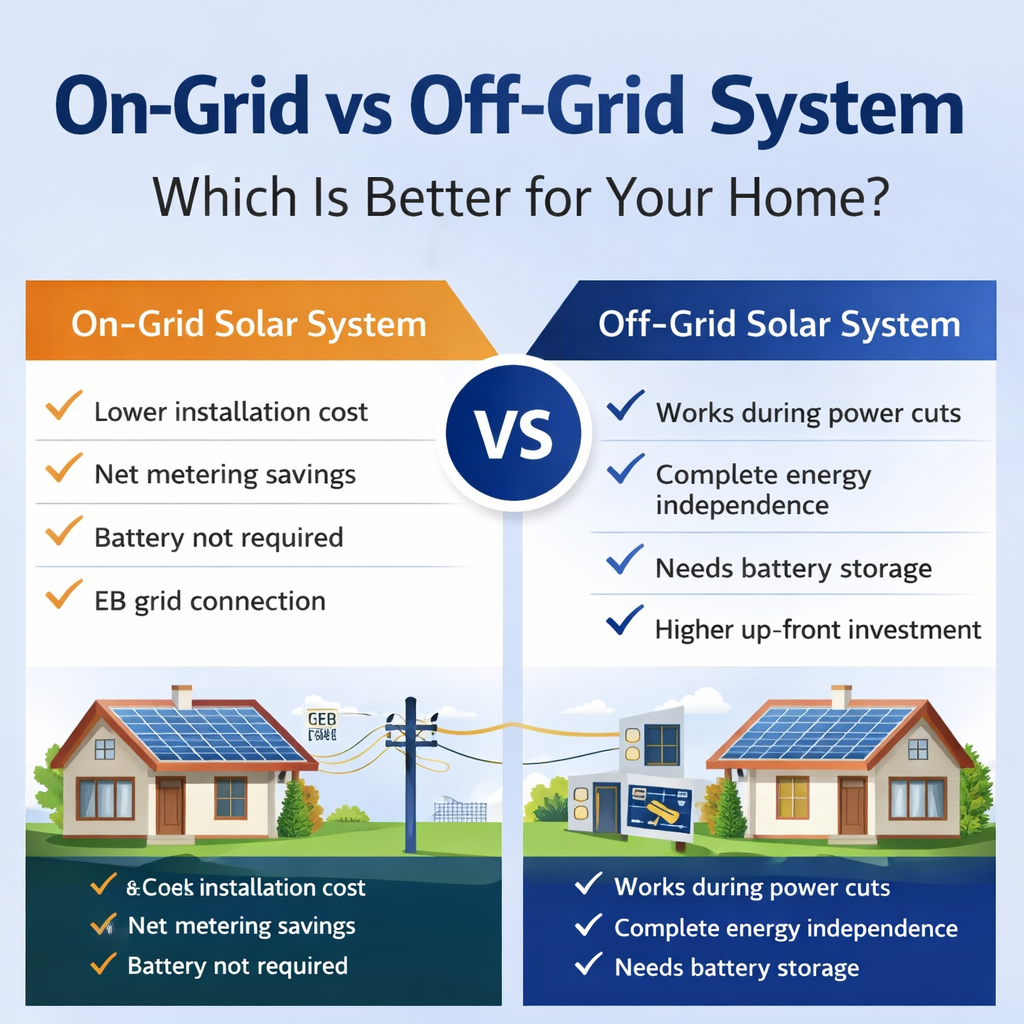
An On-Grid solar system is directly connected to the electricity board (EB).
During the daytime, solar panels generate power for your home. If extra electricity is produced, it is sent back to the grid through net metering. At night, you use electricity from the grid.
Benefits of On-Grid Solar System:
-
Lower installation cost
-
No battery required
-
Net metering savings
-
Low maintenance
-
Ideal for city homes
However, during a power cut, an On-Grid system will not supply electricity because it depends on the grid connection.
What Is an Off-Grid Solar System?
An Off-Grid solar system works independently from the electricity grid.
It uses batteries to store the solar energy generated during the day. This stored power is used at night or during power cuts.
Benefits of Off-Grid Solar System:
-
Works during power outages
-
No dependency on EB
-
Suitable for remote areas
-
Complete energy independence
The only drawback is the higher initial cost due to battery storage.
On-Grid vs Off-Grid Solar System – Quick Comparison
| Feature | On-Grid | Off-Grid |
|---|---|---|
| EB Connection | Yes | No |
| Battery Required | No | Yes |
| Initial Cost | Lower | Higher |
| Works During Power Cut | No | Yes |
| Best For | Urban Homes | Remote Areas |
Which Solar System Should You Choose?
If your main goal is to reduce your electricity bill and you have a stable EB supply, an On-Grid solar system is usually the best choice.
If you live in an area with frequent power cuts or no grid access, an Off-Grid solar system is more suitable.
Before deciding, a proper load calculation and site inspection are important to ensure the right system size and configuration.
Frequently Asked Questions (FAQ)
1. What is the main difference between On-Grid and Off-Grid solar systems?
The main difference is grid connection. On-Grid systems are connected to the electricity board, while Off-Grid systems operate independently using batteries.
2. Does an On-Grid solar system work during power cuts?
No. For safety reasons, On-Grid systems automatically shut down during power outages.
3. Why is an Off-Grid solar system more expensive?
Off-Grid systems require battery storage, which increases the overall installation cost.
4. Which system saves more money?
On-Grid solar systems generally provide faster return on investment because they do not require expensive batteries.
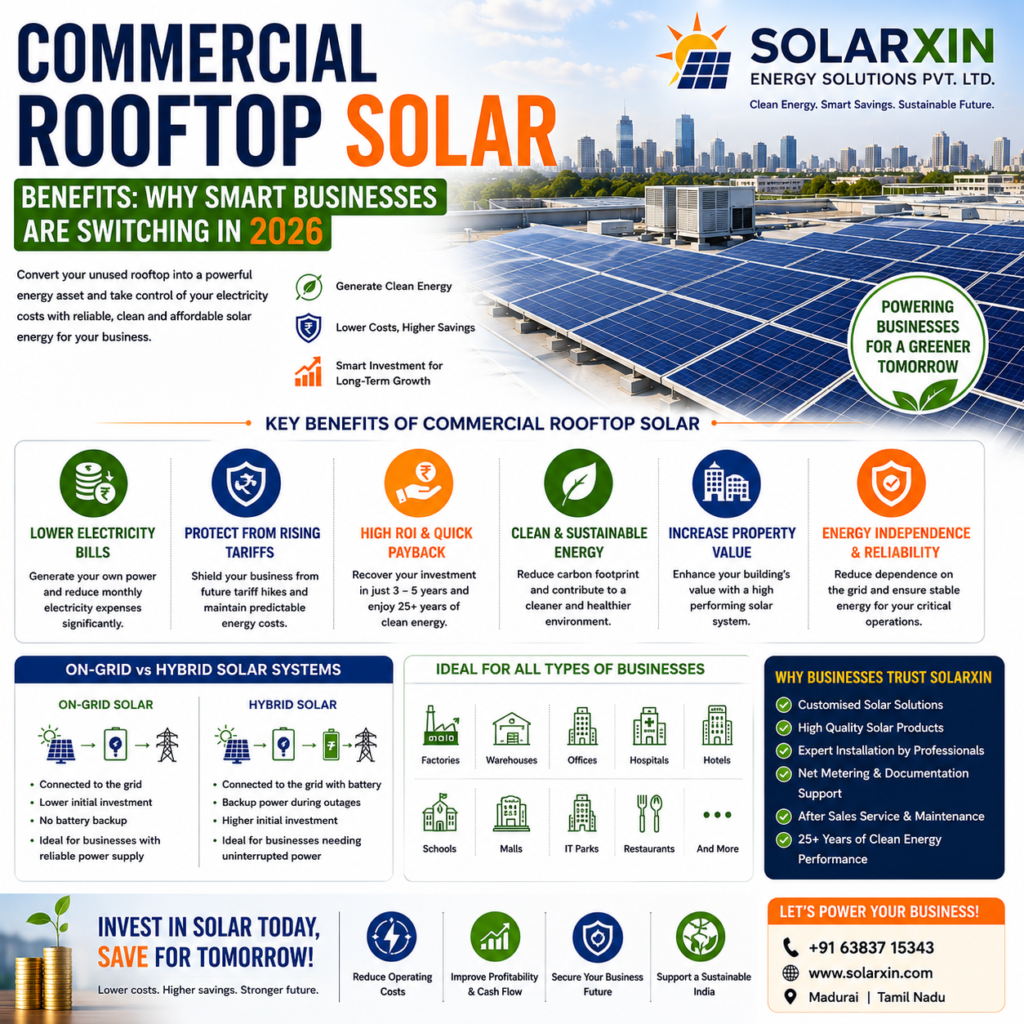
5. Can I combine both systems?
Yes. A Hybrid solar system combines On-Grid benefits with battery backup, offering both savings and power security.