


Bihar Approves 300 MW Hybrid Renewable Power Project with Battery Storage


Bihar has taken another major step toward renewable energy expansion after the Bihar Electricity Regulatory Commission (BERC) approved a 300 MW wind-solar hybrid power procurement proposal submitted by Bihar State Power Holding Company Limited (BSPHCL).
The renewable energy project will be implemented through the Solar Energy Corporation of India (SECI) under the ISTS Hybrid Tranche-IX program. The agreement will run on a long-term 25-year basis to help Bihar meet its future Renewable Purchase Obligation (RPO) targets.

Bihar Hybrid Solar Project with BESS
One of the biggest highlights of the Bihar Hybrid Solar Project is the integration of a 300 MWh Battery Energy Storage System (BESS). The battery storage system was proposed to improve power availability during peak demand hours and strengthen overall grid stability.
In addition, the battery storage infrastructure will help balance fluctuations in renewable power generation. This ensures more reliable electricity supply from hybrid renewable systems.
The project configuration was revised and proposed by ACME Solar Holdings to improve operational efficiency and long-term performance.
Cost-Effective Renewable Power Procurement
BERC has approved a discovered tariff of ₹3.25 per kWh along with a SECI trading margin of ₹0.07 per kWh.
As a result, the procurement remains competitive for Bihar’s electricity distribution companies.
The project will support:
- North Bihar Power Distribution Company (NBPDCL)
- South Bihar Power Distribution Company (SBPDCL)
Both utilities are expected to benefit from improved renewable energy availability and better compliance with future clean energy obligations.
Why Battery Storage Is Important
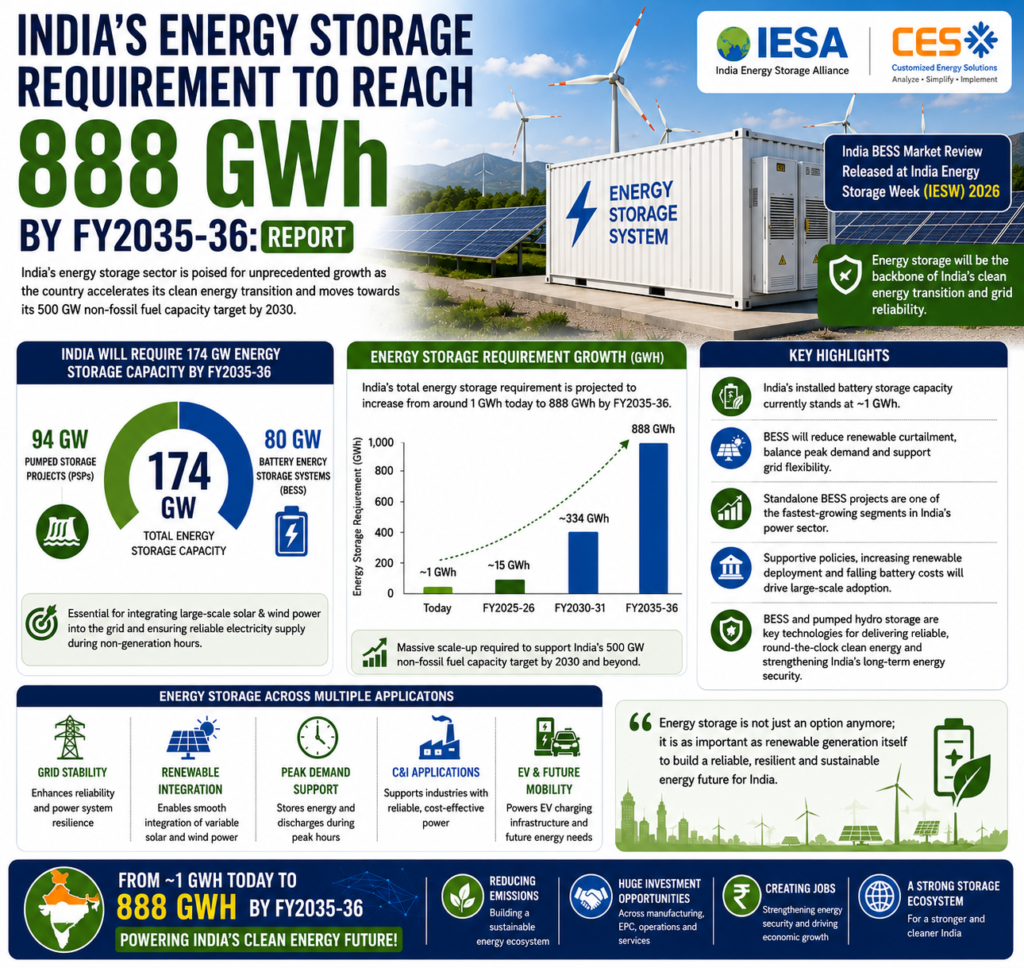
Battery Energy Storage Systems (BESS) are becoming increasingly important in India’s renewable energy sector.
Benefits of BESS include:
- Better grid stability
- Reliable renewable power supply
- Peak demand support
- Reduced power fluctuations
- Improved energy efficiency
Therefore, hybrid renewable projects combined with battery storage are considered essential for long-term clean energy growth.
Benefits for Bihar’s Renewable Energy Goals
According to BSPHCL, Bihar could face a renewable energy shortfall of nearly 5,645 million units (MU) by FY 2026-27 if additional renewable capacity is not added.
Furthermore, the shortfall may increase to approximately 7,936 MU by FY 2029-30.
The Bihar Hybrid Solar Project is expected to help reduce this future energy gap while supporting the state’s growing clean energy demand.
Meanwhile, the project will also improve renewable integration into the electricity grid and strengthen energy reliability across Bihar.
🇮🇳 Future of Hybrid Renewable Projects in India
Hybrid renewable projects are gaining strong momentum across India. States are increasingly focusing on combining solar, wind, and battery storage technologies to deliver firm and dispatchable renewable energy.
As India expands its clean energy infrastructure, projects like this are expected to play a major role in improving grid flexibility and accelerating renewable energy adoption.
The Bihar Hybrid Solar Project marks another major step in India’s renewable energy transition. With integrated battery storage and hybrid renewable power, Bihar is strengthening grid stability and supporting long-term clean energy growth.
The approval also highlights the growing importance of large-scale hybrid renewable projects in ensuring sustainable and reliable energy supply across the country.
India Needs $145 Billion Investment for Renewable Energy Growth