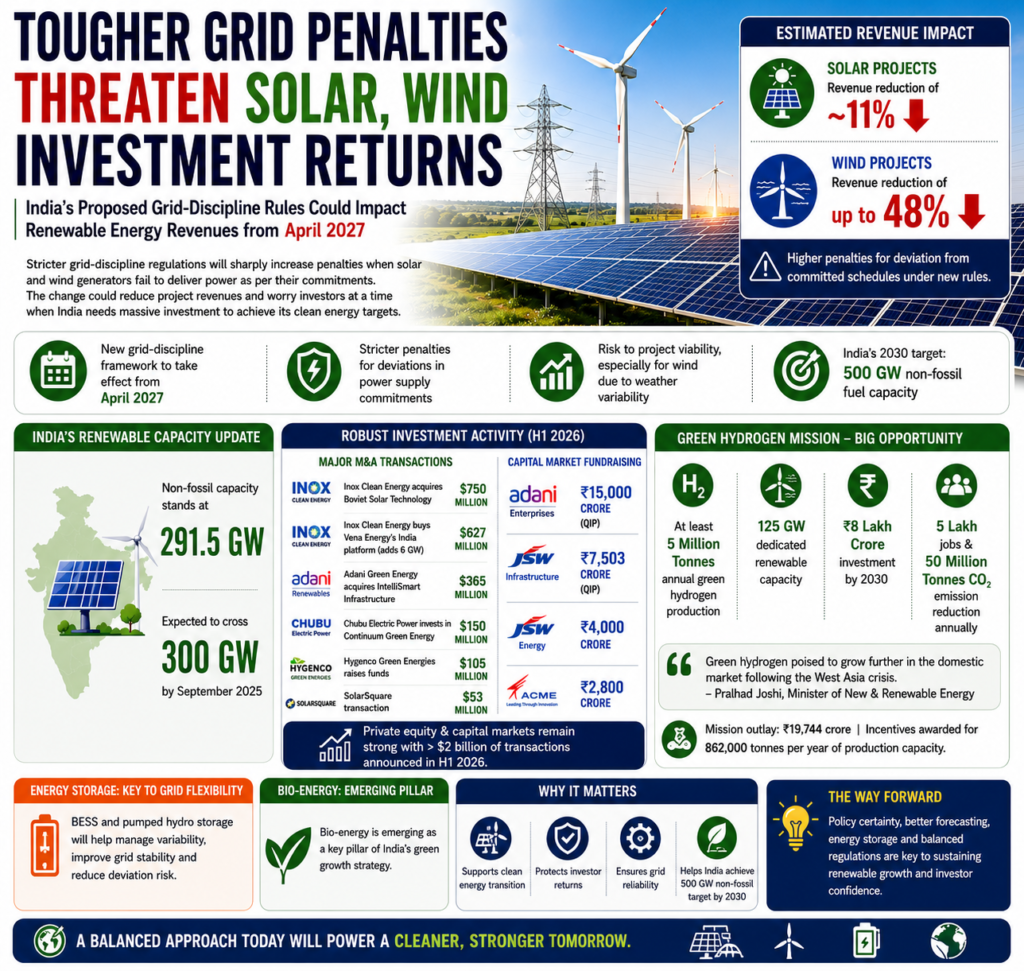


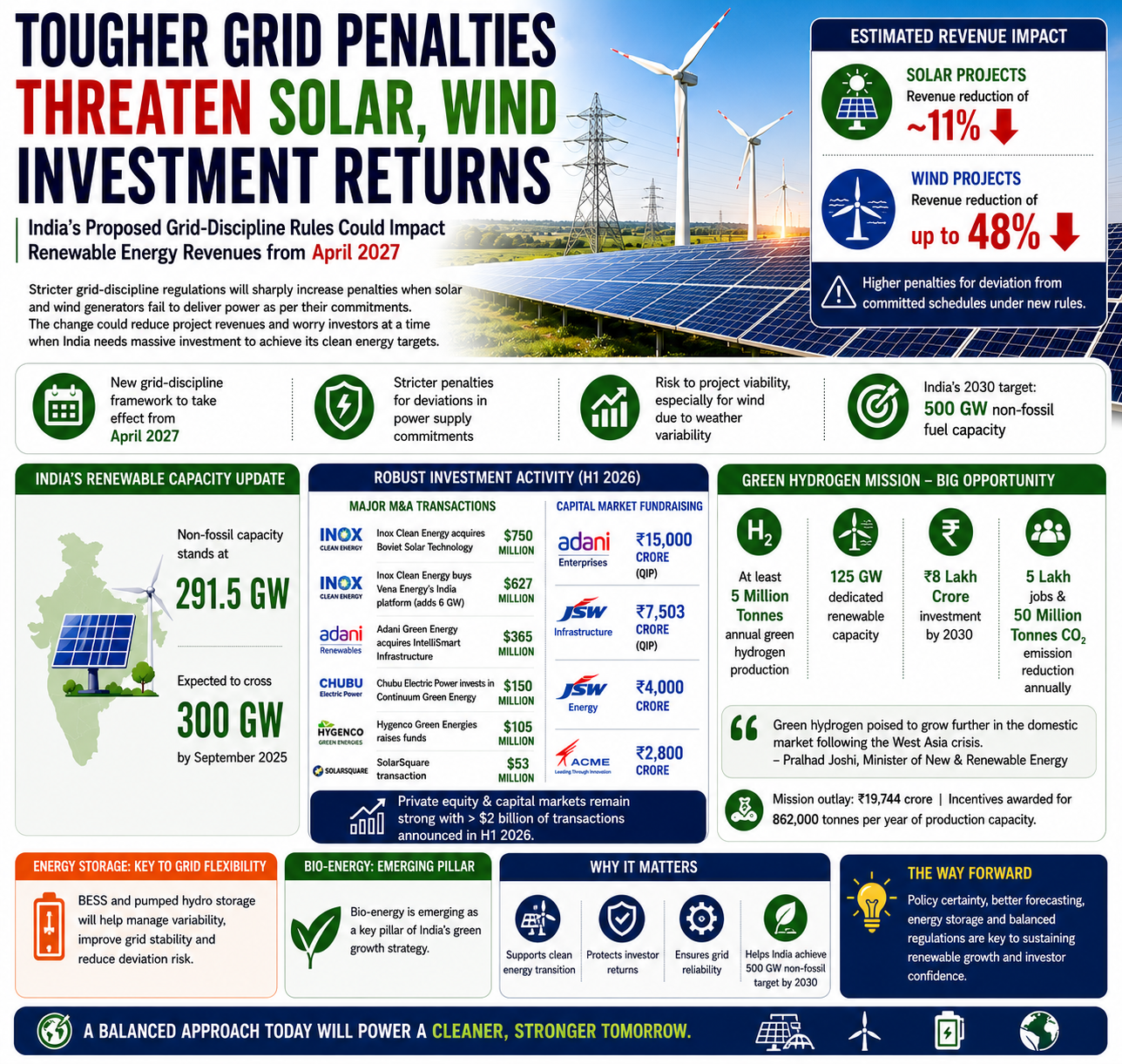


India Renewable Grid Rules are expected to become stricter from April 2027, introducing tighter grid compliance requirements for renewable energy generators. The proposed framework could significantly affect the financial performance of solar and wind projects by increasing penalties when electricity generation deviates from scheduled commitments.
The proposed changes have sparked discussions across India’s renewable energy industry. While the government aims to improve grid reliability and power system stability, renewable energy developers and investors are evaluating how the new regulations could influence project returns and future investments.
Stricter Grid Compliance for Renewable Energy
The proposed regulations require renewable power producers to maintain closer alignment between scheduled and actual electricity generation.
Solar and wind generation naturally varies because of changing weather conditions. Cloud cover, wind speed and seasonal patterns can affect electricity output even when plants operate normally.
Under the proposed framework, larger deviations from committed schedules may attract higher financial penalties. Industry estimates suggest that the impact could be more significant for wind projects than solar projects because wind generation generally experiences greater variability.
Grid discipline has become increasingly important as renewable energy contributes a larger share of India’s electricity supply. A stable electricity network requires accurate forecasting and better coordination between power generators and grid operators.
Potential Impact on Investor Returns
Renewable energy projects are typically financed using long-term revenue projections.
Any regulatory change that increases operational costs or reduces project revenue can influence investment decisions. Developers may need to strengthen forecasting systems, improve operational planning and explore technologies that minimise generation deviations.
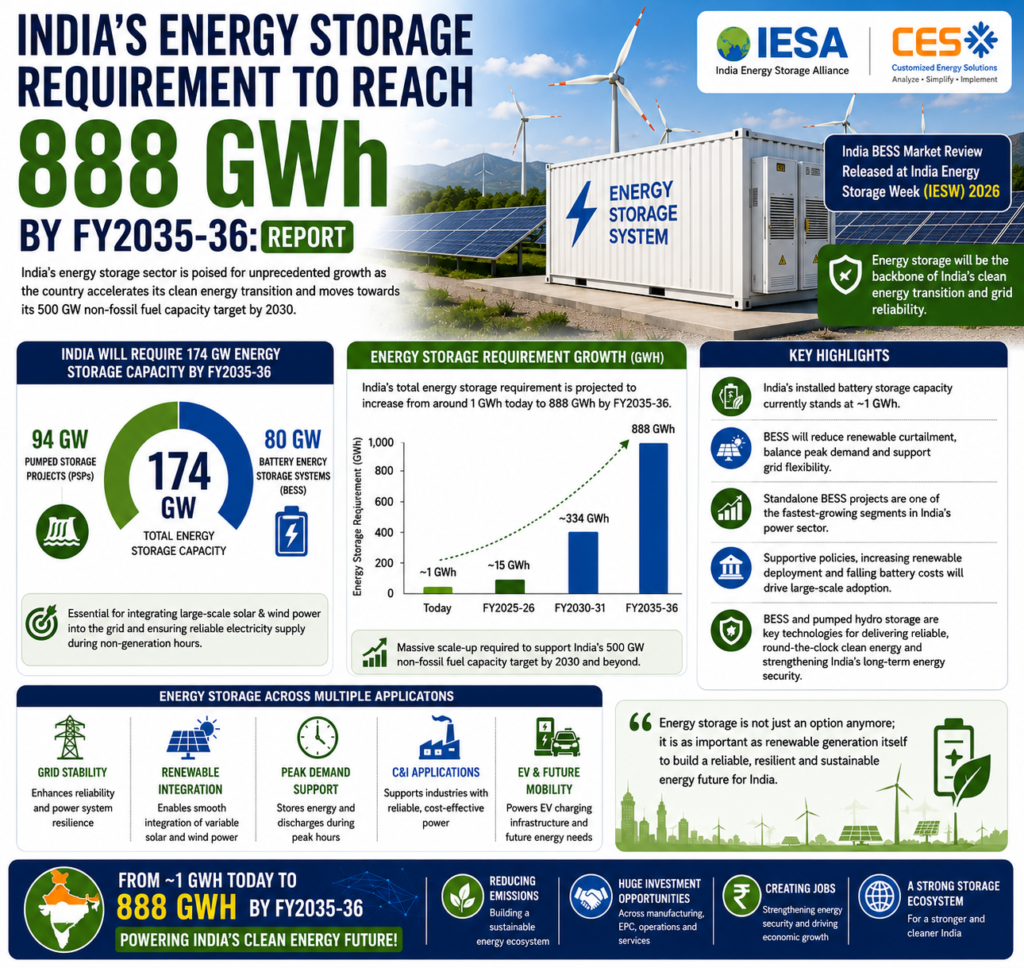
The proposed rules could also encourage greater adoption of Battery Energy Storage Systems (BESS), hybrid renewable projects and advanced forecasting platforms. These technologies can help improve scheduling accuracy and reduce exposure to deviation-related penalties.
As India continues expanding renewable energy capacity, maintaining a balance between grid stability and investor confidence will remain essential.
Renewable Investment Activity Remains Strong
Despite regulatory discussions, investment activity within India’s renewable energy sector remains healthy.
Private equity investments, mergers and acquisitions have continued across solar, wind and clean energy businesses. Several major transactions have been announced involving renewable energy developers, infrastructure companies and international investors.
Capital markets have also remained active, with renewable energy companies raising funds through qualified institutional placements and other financing mechanisms.
These investments demonstrate continued confidence in India’s long-term renewable energy market despite short-term regulatory uncertainty.
Renewable Capacity Continues to Expand
India has made significant progress in expanding non-fossil fuel electricity generation.
The country continues moving towards its national target of achieving 500 GW of non-fossil fuel capacity by 2030. Solar, wind, hydro, biomass and nuclear energy together are expected to play a major role in meeting this objective.
As renewable penetration increases, electricity grid management becomes more complex. Maintaining frequency stability, balancing electricity demand and integrating variable renewable generation require stronger transmission systems and improved forecasting capabilities.
The proposed grid framework is part of the broader effort to modernise India’s electricity infrastructure while supporting increasing renewable energy integration.
Green Hydrogen and Energy Storage Create New Opportunities
India’s renewable energy strategy extends beyond solar and wind generation.
The National Green Hydrogen Mission is encouraging clean hydrogen production supported by dedicated renewable energy capacity. The programme aims to stimulate investment, create employment opportunities and reduce carbon emissions over the coming years.
At the same time, Battery Energy Storage Systems and pumped hydro storage projects are expected to become increasingly important.
Energy storage allows excess renewable electricity generated during favourable weather conditions to be stored and supplied later when demand increases or renewable generation declines.
The combination of renewable generation and energy storage can improve grid flexibility while helping project developers manage generation variability.
Policy Stability Will Support Long-Term Growth
India’s renewable energy sector continues to attract strong domestic and international investment.
However, long-term investor confidence depends on regulatory clarity, predictable policy implementation and commercially sustainable project economics.
Grid discipline rules will play an important role in improving electricity system reliability, but the renewable energy industry will also require sufficient flexibility to accommodate the natural variability of solar and wind resources.
Future investment decisions are likely to depend on how effectively the final regulations balance operational discipline with practical renewable energy generation conditions.
If implemented carefully, stronger forecasting, advanced grid management, energy storage and digital monitoring can help improve renewable energy integration without slowing India’s clean energy transition.
As India accelerates towards its 2030 renewable energy targets, collaboration between regulators, grid operators and renewable energy developers will remain essential for building a stable, reliable and investment-friendly electricity system.