

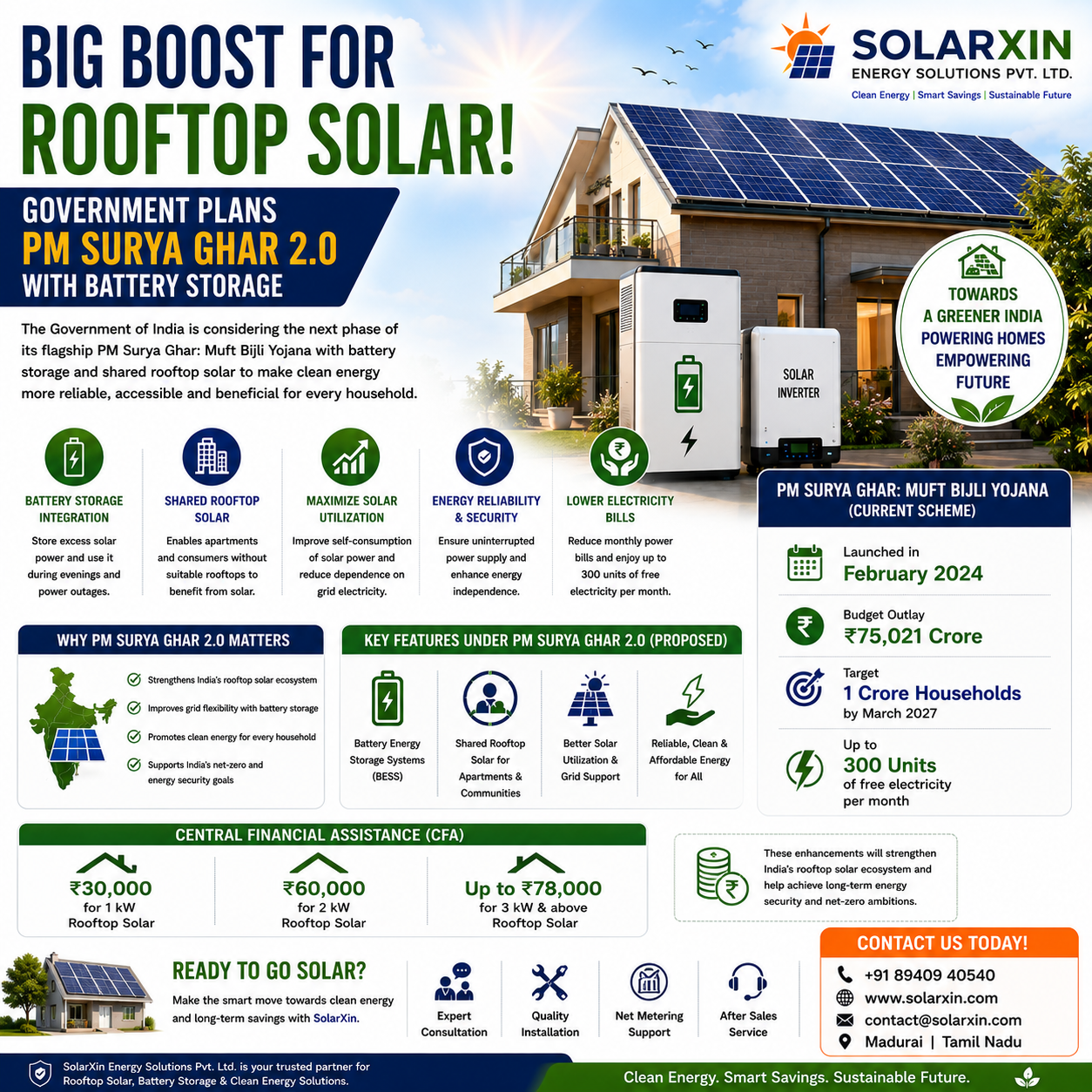


PM Surya Ghar 2.0 is expected to become the next major milestone in India’s residential solar mission. The Government of India is reportedly evaluating the next phase of the PM Surya Ghar: Muft Bijli Yojana, with proposals that include Battery Energy Storage Systems (BESS) and shared rooftop solar models. These enhancements aim to make rooftop solar more efficient, reliable and accessible to millions of households across the country.
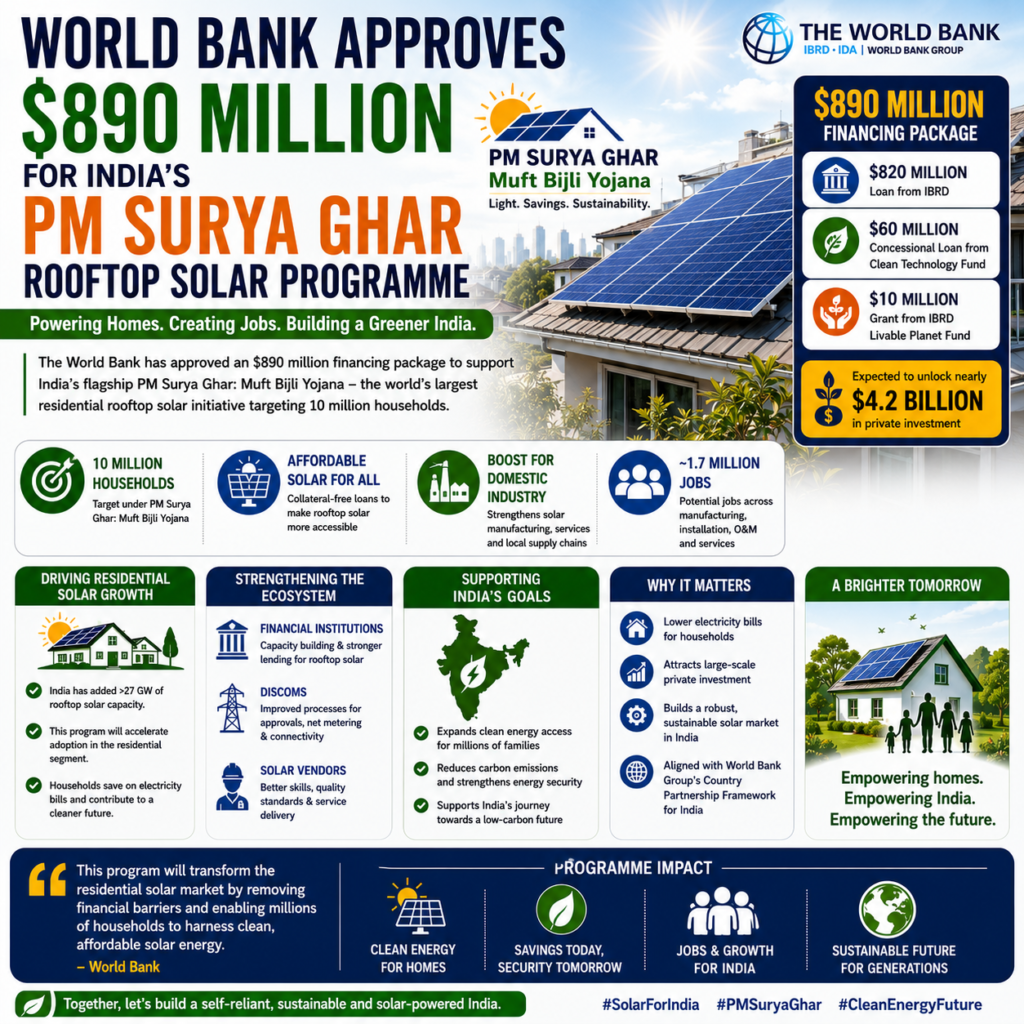
The existing PM Surya Ghar scheme has already transformed India’s rooftop solar sector by encouraging homeowners to install residential solar systems with attractive government subsidies. As the programme approaches nearly 50 lakh beneficiary households, policymakers are exploring ways to strengthen the scheme further and support India’s long-term renewable energy ambitions.

A New Phase for India’s Rooftop Solar Mission
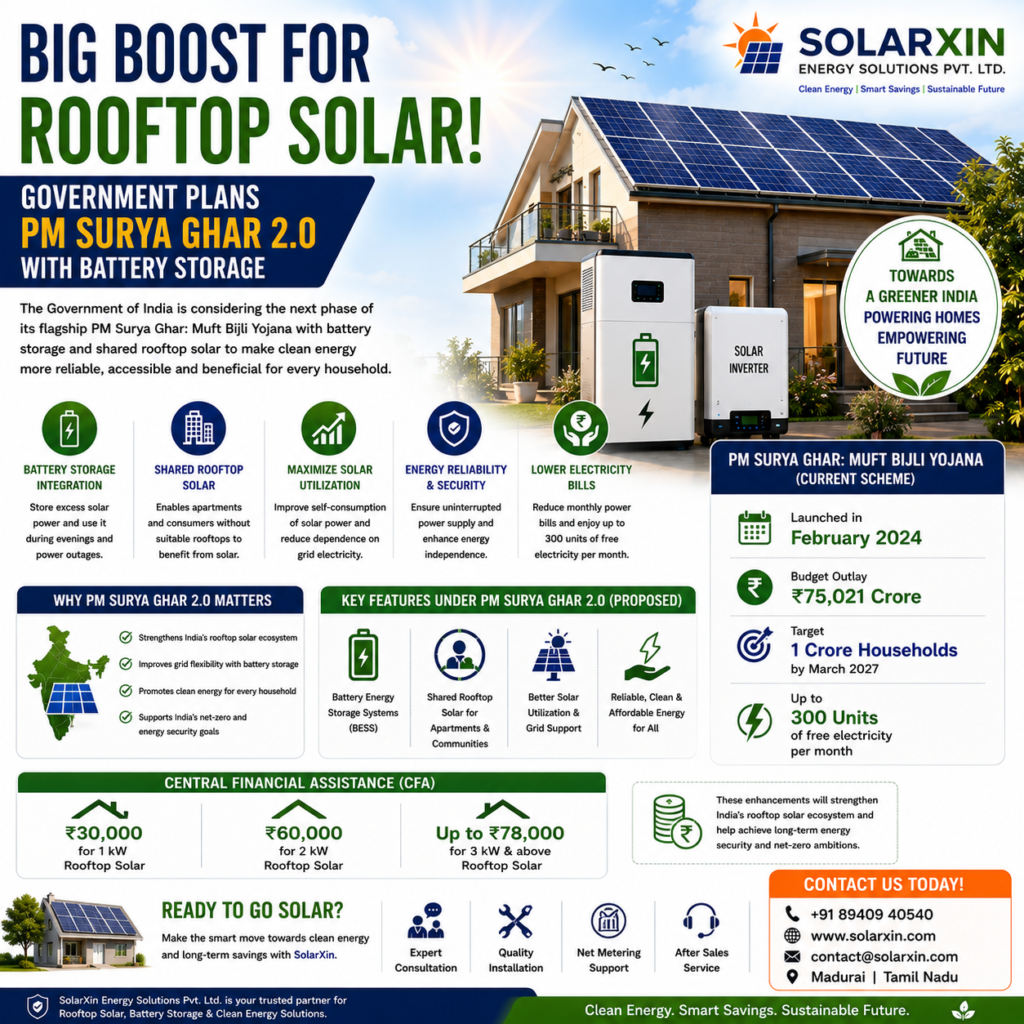
Launched in February 2024 with a budget allocation of ₹75,021 crore, PM Surya Ghar: Muft Bijli Yojana was introduced to promote residential rooftop solar installations across India.
The scheme targets rooftop solar installations on 1 crore households by March 2027, helping families generate their own clean electricity while reducing dependence on conventional power.
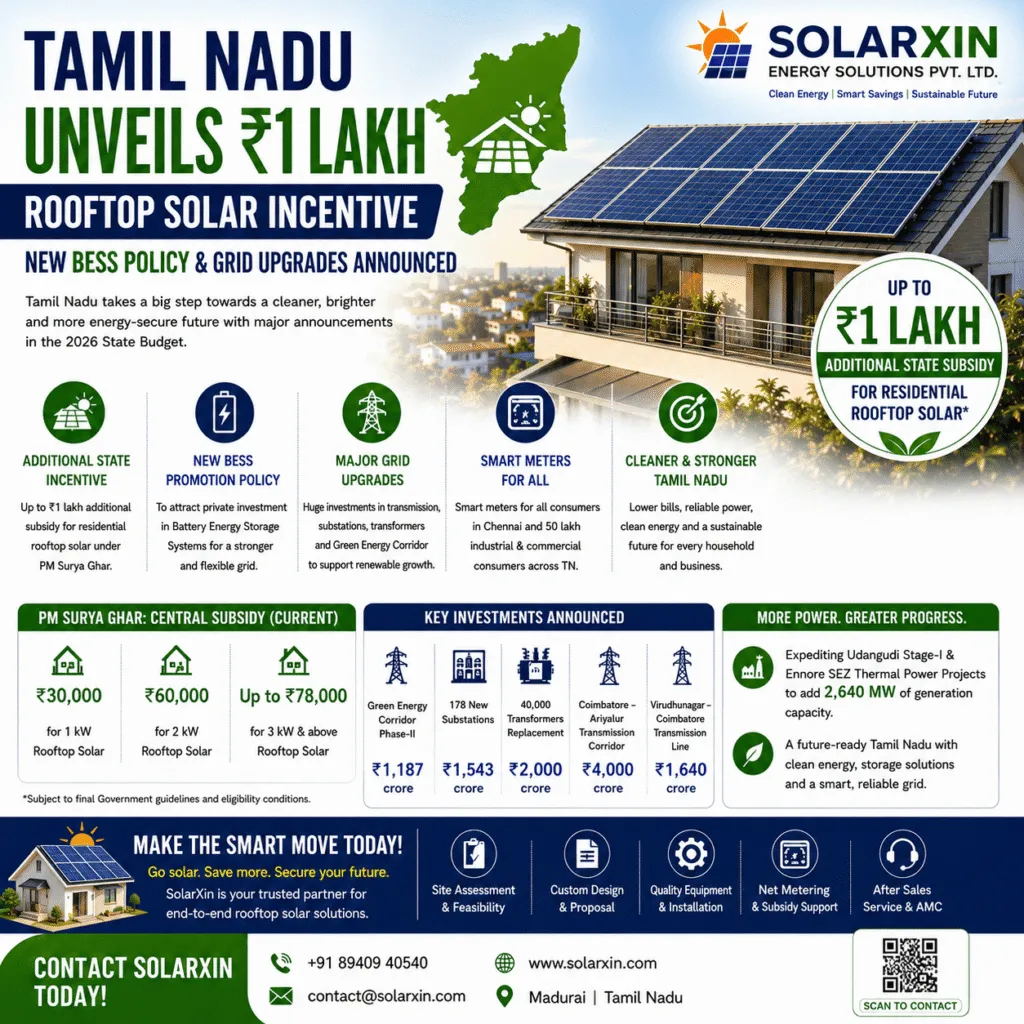
Eligible homeowners currently receive Central Financial Assistance (CFA) based on system capacity:
- ₹30,000 for 1 kW systems
- ₹60,000 for 2 kW systems
- Up to ₹78,000 for 3 kW and above
The scheme also aims to help eligible households receive up to 300 units of free electricity every month, significantly reducing electricity expenses.
Battery Storage Could Make Solar More Reliable
One of the biggest proposed upgrades under PM Surya Ghar 2.0 is the addition of Battery Energy Storage Systems (BESS).
Today, many rooftop solar systems generate surplus electricity during the daytime when sunlight is abundant. However, electricity demand often increases during the evening after solar generation declines.
Battery storage allows homeowners to store excess solar energy generated during the day and use it later when sunlight is unavailable.
This offers several advantages:
- Better utilisation of rooftop solar generation
- Reduced dependence on grid electricity
- Backup power during outages
- Improved energy independence
- Higher self-consumption of solar energy
As battery prices continue to decline, residential energy storage is becoming an increasingly attractive option for Indian homeowners.
Shared Rooftop Solar Could Expand Access
Another major proposal under discussion is shared rooftop solar.
Many apartment residents and urban households cannot install individual rooftop solar systems because of limited roof access or shared ownership.
Under a community-based solar model, multiple households could benefit from a common rooftop solar installation.
Shared solar has the potential to:
- Increase rooftop solar adoption in cities
- Benefit apartment owners
- Maximise rooftop utilisation
- Reduce infrastructure costs
- Expand clean energy access to more consumers
This approach has already been adopted successfully in several international renewable energy markets.
Supporting India’s Clean Energy Goals
India continues to expand renewable energy at an unprecedented pace.
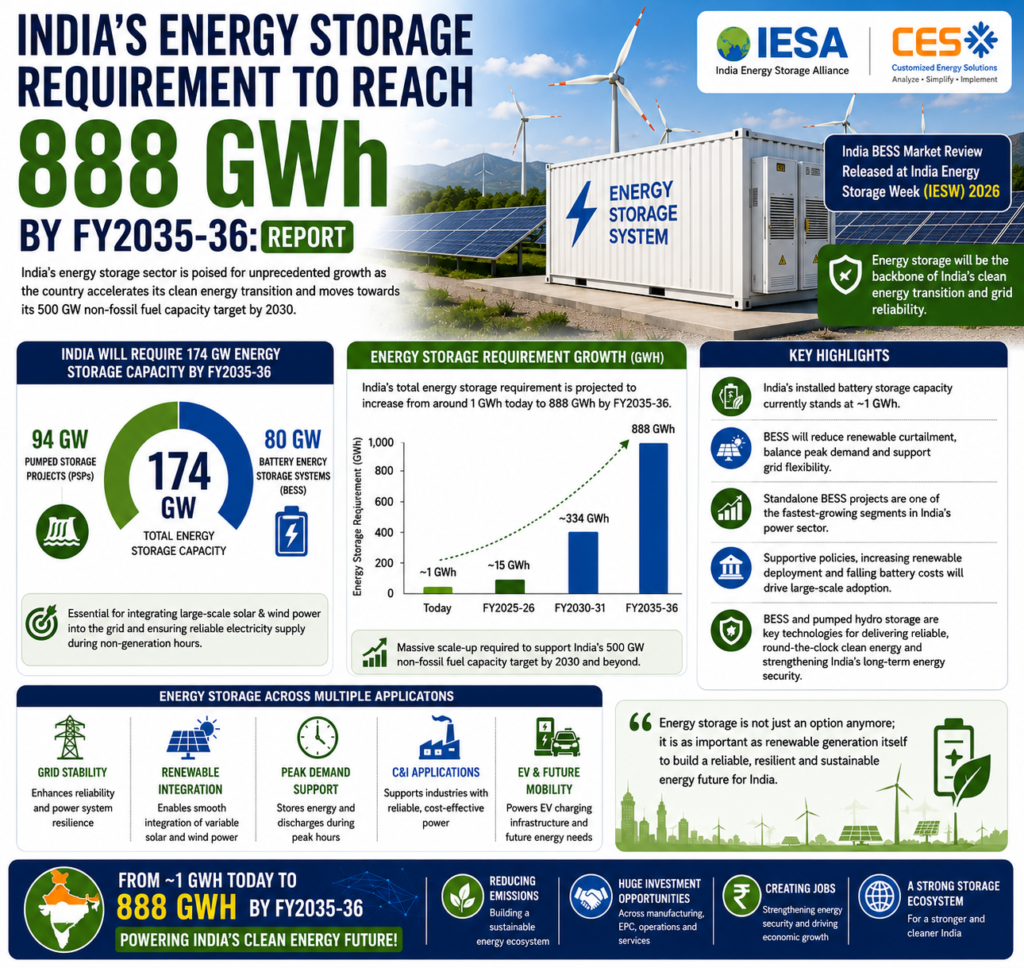
Alongside utility-scale solar parks, rooftop solar is expected to play an increasingly important role in achieving the country’s target of 500 GW of non-fossil fuel capacity by 2030.
Adding battery storage to residential solar systems can improve grid flexibility by reducing pressure on electricity distribution companies during peak demand.
Energy storage also enables better integration of renewable energy while improving overall electricity system reliability.
Benefits for Homeowners
If PM Surya Ghar 2.0 is implemented with battery storage support, homeowners could enjoy several long-term advantages.
These include:
- Greater electricity savings
- Increased energy security
- Better use of self-generated solar power
- Lower dependence on conventional electricity
- Improved protection against future tariff increases
For many households, battery storage can transform rooftop solar from a daytime electricity solution into a reliable 24-hour energy resource.
What Happens Next?
At present, the Ministry of New and Renewable Energy (MNRE) has not announced an official launch date or final implementation framework for PM Surya Ghar 2.0.
However, discussions surrounding battery storage and shared rooftop solar demonstrate the government’s continued commitment to strengthening India’s distributed renewable energy ecosystem.
Industry experts believe that combining rooftop solar with advanced battery storage could significantly improve renewable energy adoption while creating new opportunities for manufacturers, EPC companies and technology providers.
SolarXin’s Perspective
At SolarXin Energy Solutions, we believe the future of residential solar goes beyond rooftop panels alone.
Battery Energy Storage Systems will play a vital role in helping homeowners maximise their solar investment while improving energy reliability.
As government policies continue to evolve, SolarXin remains committed to delivering advanced rooftop solar solutions, battery storage integration and complete EPC services for residential, commercial and industrial customers across India.
PM Surya Ghar 2.0 has the potential to become the next major step in India’s clean energy transformation.
By introducing Battery Energy Storage Systems and shared rooftop solar, the proposed programme can improve energy independence, increase renewable energy utilisation and make rooftop solar accessible to even more households.
Although the scheme is still under evaluation, these proposed enhancements reflect India’s strong commitment to building a cleaner, smarter and more sustainable energy future.
Frequently Asked Questions
What is PM Surya Ghar 2.0?
PM Surya Ghar 2.0 is the proposed next phase of the Government of India’s residential rooftop solar programme, expected to include battery storage and shared rooftop solar features.
Will battery storage be subsidised?
The government has not yet announced the final guidelines. Details regarding battery storage incentives may be released if PM Surya Ghar 2.0 is officially approved.
What is shared rooftop solar?
Shared rooftop solar allows multiple households, particularly apartment residents, to benefit from a common solar installation instead of individual rooftop systems.
How will battery storage help homeowners?
Battery storage stores excess solar electricity generated during the day and supplies it during the evening or during power outages, improving energy independence and reducing electricity costs.
Can SolarXin help install rooftop solar systems?
Yes. SolarXin Energy Solutions provides complete rooftop solar EPC services, including system design, installation, net metering assistance and maintenance support for residential and commercial customers.