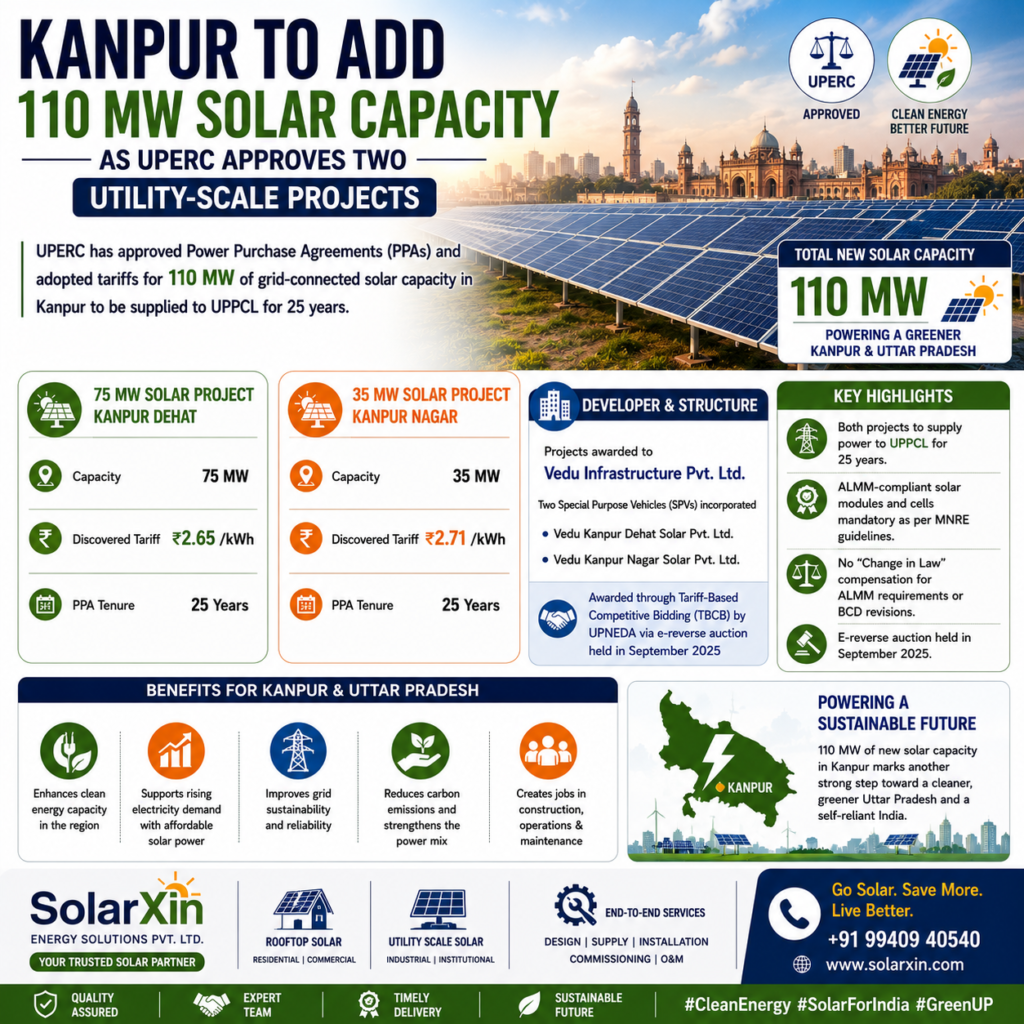


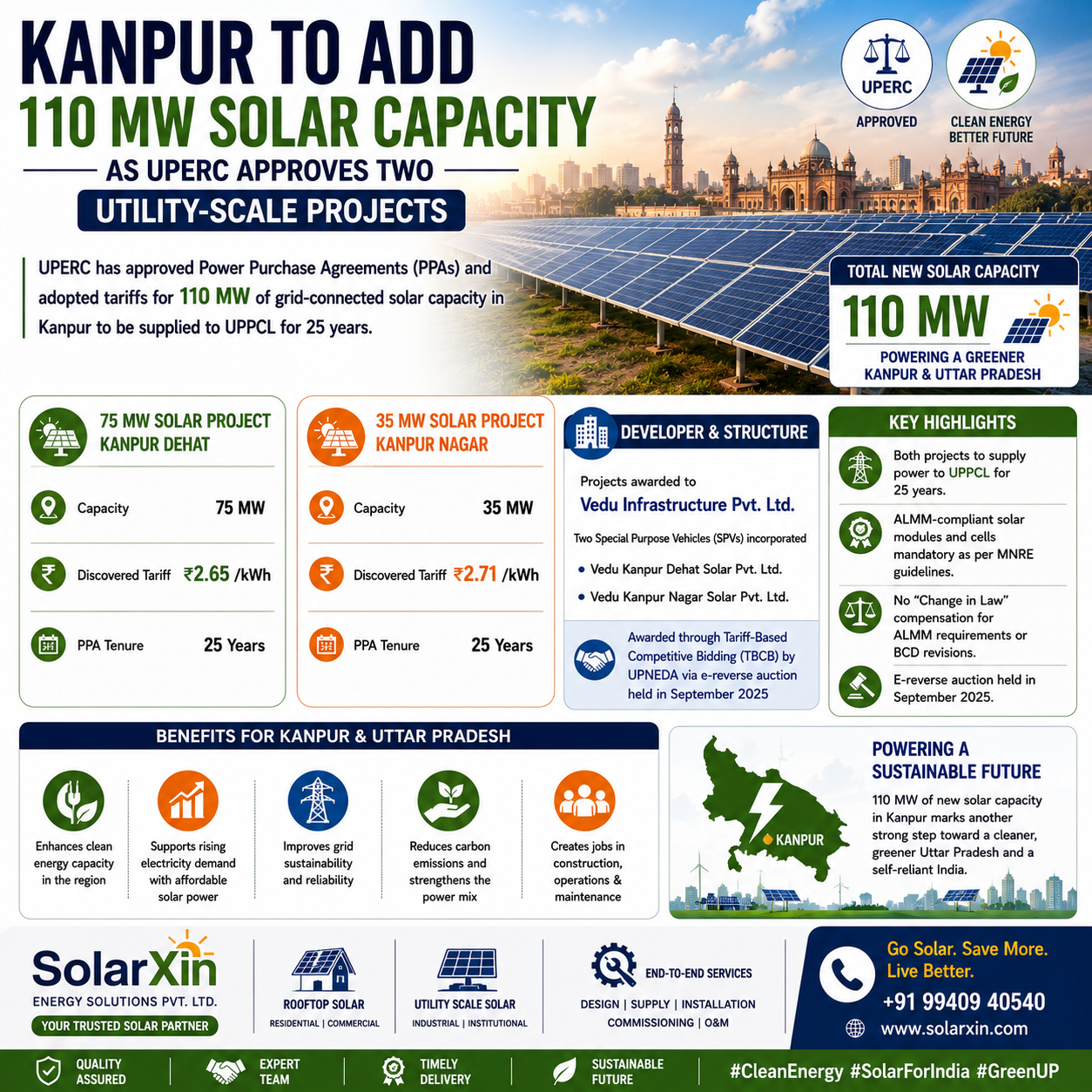


Kanpur Solar Projects are set to strengthen Uttar Pradesh’s renewable energy sector after the Uttar Pradesh Electricity Regulatory Commission (UPERC) approved two utility-scale solar power projects with a combined capacity of 110 MW. The approval covers a 75 MW solar project in Kanpur Dehat and a 35 MW project in Kanpur Nagar, marking another important step in expanding clean electricity generation across the state.
Both solar projects will supply electricity to Uttar Pradesh Power Corporation Limited (UPPCL) under long-term Power Purchase Agreements (PPAs) extending for 25 years. The projects are expected to improve the state’s renewable energy portfolio while supporting India’s long-term clean energy goals.
Two Utility-Scale Solar Projects Approved
The approved projects include a 75 MW grid-connected solar power plant in Kanpur Dehat and a 35 MW solar facility in Kanpur Nagar.
Both projects were awarded through a transparent Tariff-Based Competitive Bidding (TBCB) process organised by the Uttar Pradesh New and Renewable Energy Development Agency (UPNEDA). Competitive bidding helps ensure cost-effective renewable energy procurement while encouraging greater private sector participation.
To develop the projects, Vedu Infrastructure Private Limited has established two Special Purpose Vehicles (SPVs): Vedu Kanpur Dehat Solar Private Limited and Vedu Kanpur Nagar Solar Private Limited.
The separate project companies will oversee construction, implementation and long-term operation of their respective solar power plants.
Competitive Solar Tariffs Strengthen Project Viability
The projects achieved competitive electricity tariffs during the bidding process.
The 75 MW Kanpur Dehat project secured a tariff of ₹2.65 per kWh, while the 35 MW Kanpur Nagar project received a tariff of ₹2.71 per kWh following an electronic reverse auction.
Competitive tariffs remain one of the key strengths of utility-scale solar power in India. Falling equipment costs, improved project efficiency and transparent bidding mechanisms continue to make solar electricity increasingly affordable.
The tariff approval also reflects improved project economics following changes in applicable GST rates for solar power generation equipment.
Affordable tariffs benefit electricity distribution companies while helping expand renewable energy procurement without significantly increasing overall power purchase costs.
ALMM-Compliant Solar Modules Required
UPERC has directed that both Kanpur Solar Projects must use solar modules and solar cells that comply with the Approved List of Models and Manufacturers (ALMM) issued by the Ministry of New and Renewable Energy.
The ALMM framework promotes the use of approved manufacturers and supports quality assurance for government-supported renewable energy projects across India.
The regulatory approval also clarifies that developers will not be entitled to claim additional compensation under “Change in Law” provisions for future ALMM requirements or revisions related to Basic Customs Duty (BCD).
This provides greater regulatory certainty for both project developers and electricity purchasers throughout the contract period.
Strengthening Uttar Pradesh’s Renewable Energy Capacity
The addition of 110 MW of new solar capacity will contribute to Uttar Pradesh’s growing renewable energy infrastructure.
Utility-scale solar projects help diversify electricity generation while reducing dependence on conventional fossil fuel-based power.
As electricity demand continues to increase across residential, commercial and industrial sectors, renewable energy projects provide a sustainable solution for meeting future power requirements.
Large-scale grid-connected solar plants can also improve long-term energy security by increasing the share of domestically generated renewable electricity.
Supporting India’s Clean Energy Transition
India continues to expand utility-scale solar development through competitive bidding programmes conducted by central and state agencies.
Projects such as the Kanpur Solar Projects demonstrate how transparent procurement mechanisms can attract private investment while delivering affordable renewable electricity.
Although detailed information regarding module technology, annual energy generation and project commissioning schedules has not yet been announced, the approved projects represent another positive development for India’s rapidly expanding solar sector.
Increasing renewable energy capacity also supports national objectives related to carbon emission reduction, sustainable development and energy independence.
A Positive Step for Kanpur and Uttar Pradesh
The approval of the Kanpur Solar Projects highlights Uttar Pradesh’s continued commitment to clean energy development.
With long-term PPAs, competitive tariffs, ALMM-compliant equipment requirements and private sector participation, the projects provide a strong foundation for reliable renewable electricity generation over the next 25 years.
Once operational, the 110 MW capacity addition will strengthen the regional electricity network, increase renewable power availability and contribute to a cleaner energy mix.
As more utility-scale solar projects are commissioned across Uttar Pradesh, the state will continue playing an important role in supporting India’s renewable energy expansion while creating opportunities for investment, employment and sustainable economic growth.