



India solar grid expansion is entering a new phase as the country rapidly increases renewable energy capacity, domestic manufacturing and transmission infrastructure. After years of dependence on conventional power generation and imported solar equipment, India is now building one of the world’s fastest-growing solar energy ecosystems.
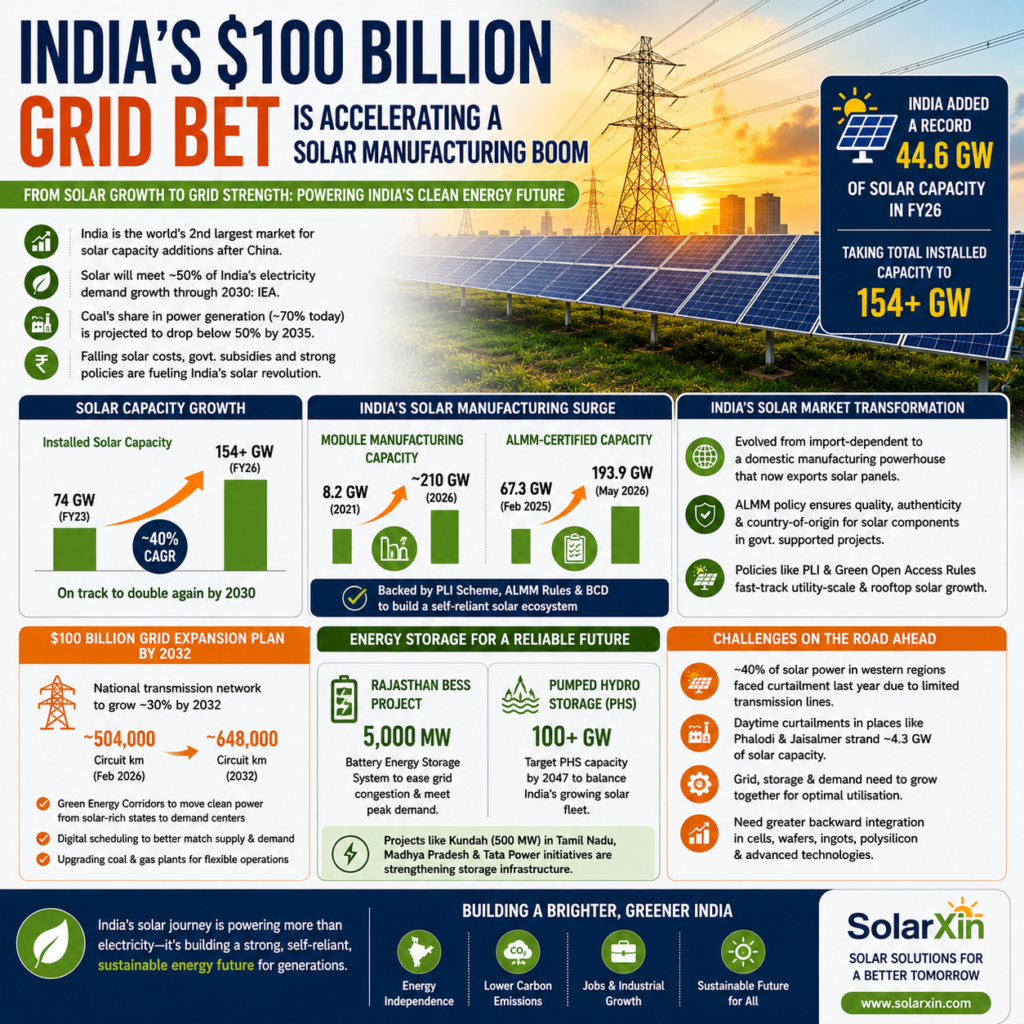
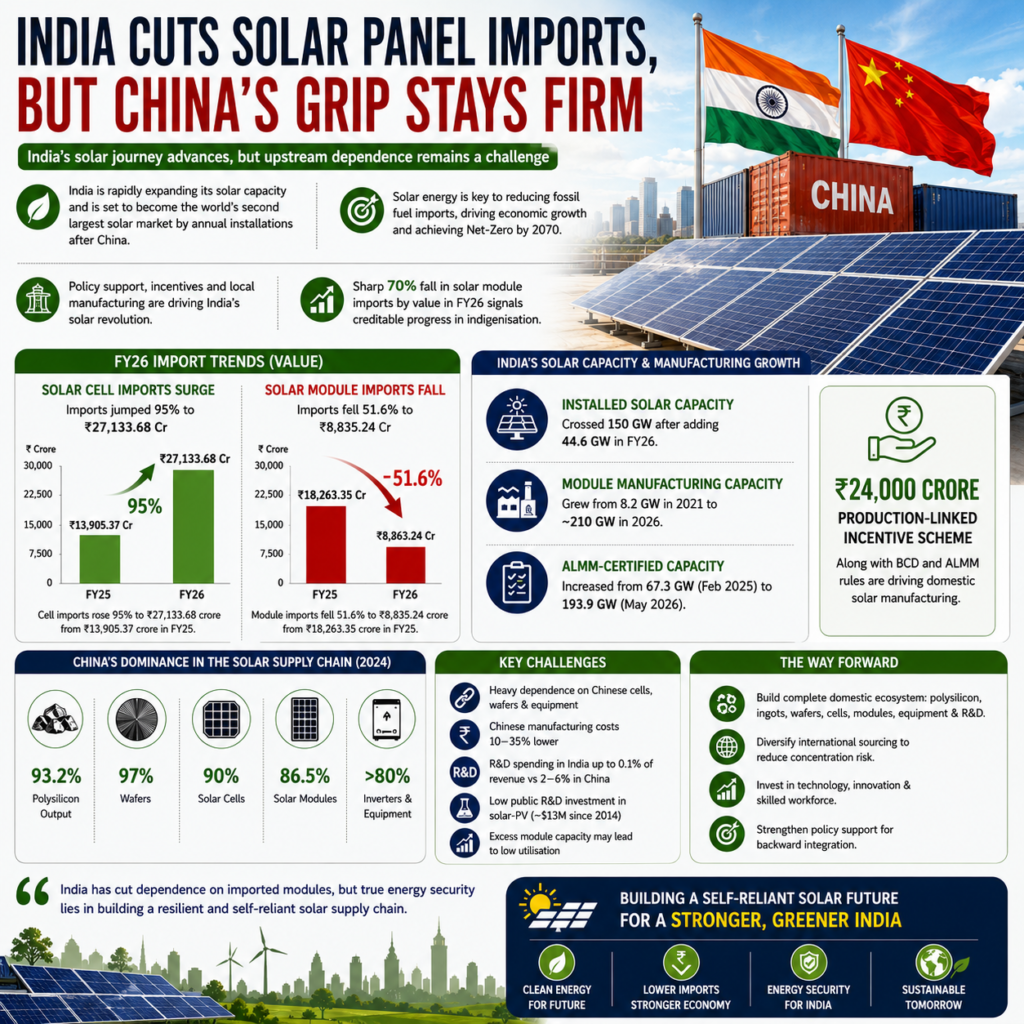
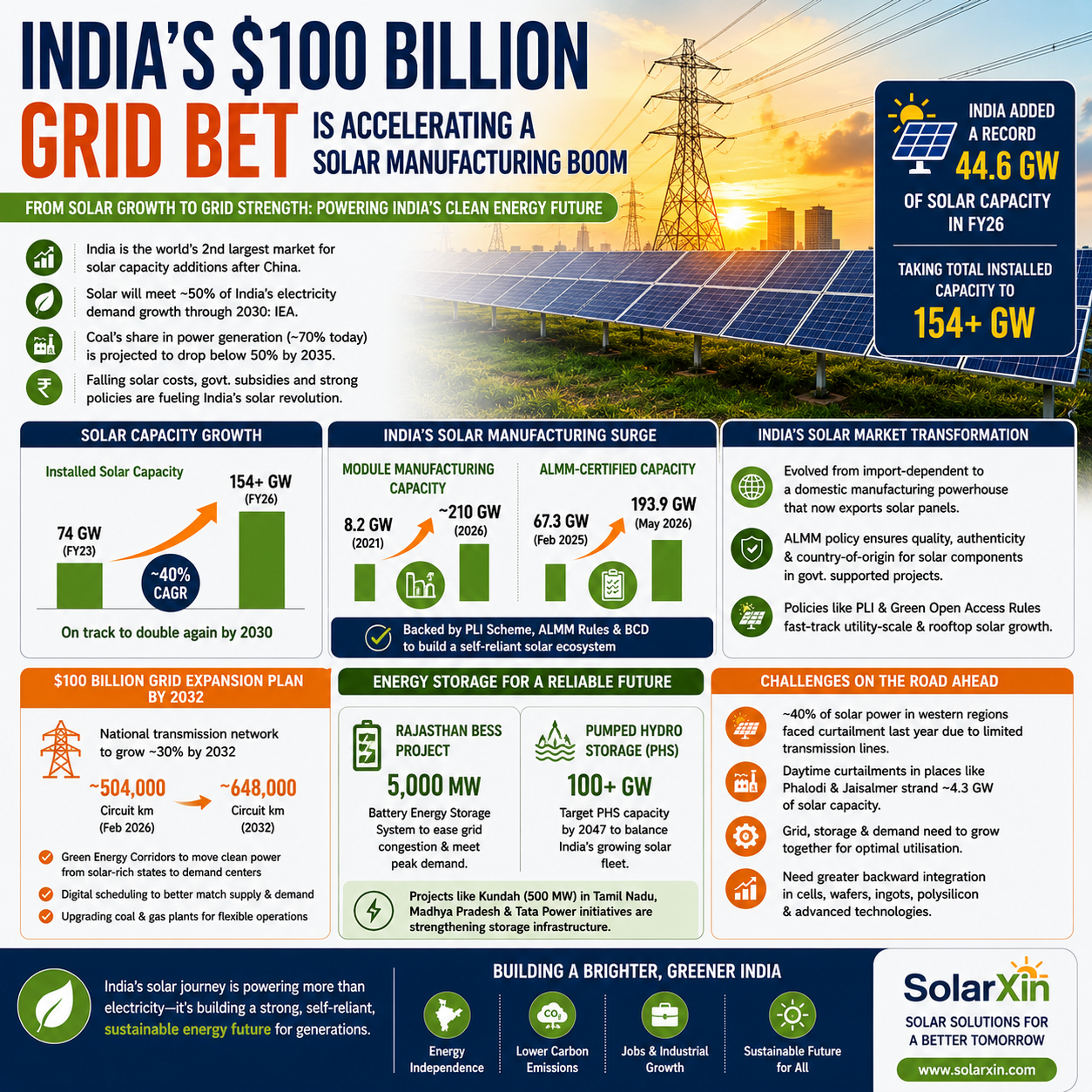
The transformation has accelerated dramatically in recent years. India added around 44.6 GW of solar capacity during FY26, taking cumulative installed solar capacity beyond 150 GW. This rapid growth has increased demand for solar modules, cells, inverters, cables, mounting structures, transformers, transmission equipment and energy storage systems.
However, adding solar generation capacity alone is not enough. Electricity generated in solar-rich regions must be transported efficiently to industrial centres, commercial users and cities. Therefore, grid expansion has become a critical part of India’s renewable energy transition.

Solar Capacity Growth Creates New Infrastructure Demand
India has emerged as one of the world’s largest solar markets, supported by utility-scale solar parks, rooftop installations, open-access projects and government renewable energy programmes.
Large projects across Rajasthan, Gujarat and other renewable-rich states are adding significant clean energy capacity. At the same time, rooftop solar programmes are expanding distributed generation among households and businesses.
This growth is creating a powerful domestic manufacturing opportunity.
Solar module production capacity has increased substantially, while domestic cell manufacturing is also expanding. Government measures such as the Production Linked Incentive scheme and the Approved List of Models and Manufacturers framework have encouraged companies to establish and expand manufacturing facilities in India.
The next challenge is to deepen the domestic supply chain further by increasing local production of cells, wafers, ingots, polysilicon and manufacturing equipment.
Why India Needs a Stronger Electricity Grid
Solar power generation is geographically concentrated. Some of India’s strongest solar resources are located far from major electricity demand centres.
For example, large renewable energy developments in Rajasthan and Gujarat need high-capacity transmission infrastructure to supply electricity to industries and cities in other regions.
Transmission infrastructure usually requires longer development periods than solar power plants. This difference can create situations where generation capacity is ready before sufficient evacuation infrastructure becomes available.
Grid congestion can lead to renewable energy curtailment, where power generation must be reduced temporarily to maintain grid stability.
Therefore, India’s transmission expansion is essential for ensuring that new renewable energy capacity can be fully utilised.
Transmission Network Expansion Towards 2032
India is planning a substantial expansion of its electricity transmission infrastructure.
The national transmission network is expected to grow significantly by 2032, along with major increases in transformation capacity and inter-regional electricity transfer capability.
Green Energy Corridors are an important part of this strategy. These transmission systems are designed to improve the integration and movement of renewable electricity from high-generation regions to demand centres.
The transmission expansion is also creating opportunities for manufacturers of transformers, conductors, switchgear, cables, substations and digital grid-management systems.
As solar installations increase, investment in the supporting electricity infrastructure is expected to become equally important.
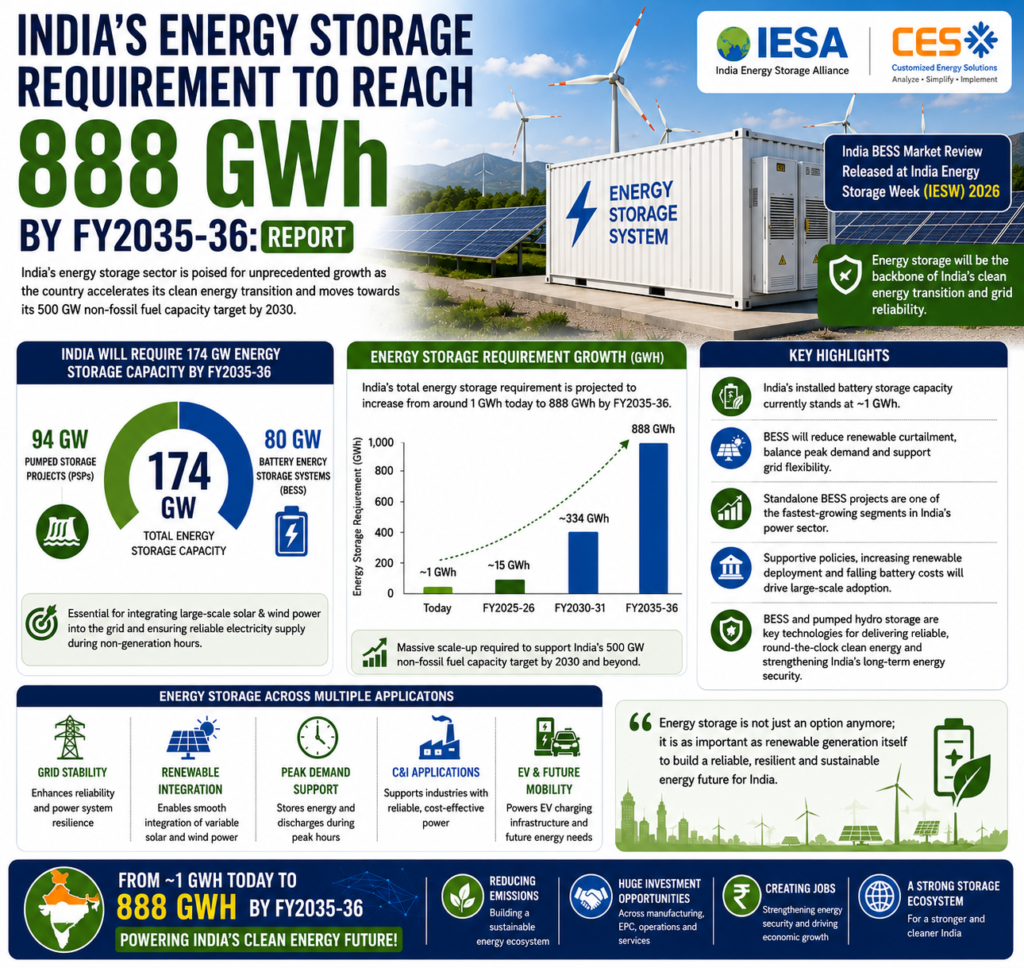
Energy Storage Becomes Essential for Solar Growth
Solar generation reaches its highest level during daylight hours, but electricity demand often continues to rise during the evening.
Energy storage can help solve this challenge.
Battery Energy Storage Systems can store excess electricity during periods of strong solar generation and release it when demand increases or solar output declines. Pumped hydro storage can provide additional large-scale balancing capability for longer-duration requirements.
Several states and renewable energy developers are now exploring or developing battery and pumped storage projects.
Tamil Nadu is also strengthening its energy storage capabilities through projects such as the Kundah pumped storage development. Similar storage investments across India will become increasingly important as variable renewable energy forms a larger part of the electricity system.
Domestic Solar Manufacturing Gains Momentum
India’s solar expansion is creating a strong market for domestic manufacturing.
Policy support has encouraged major investments in solar module and cell production. The country has moved from a heavily import-dependent module market towards substantial domestic manufacturing capacity.
However, long-term energy security requires deeper backward integration.
India still needs stronger capabilities in areas including wafers, ingots, polysilicon, advanced solar cells, battery technologies and specialised manufacturing equipment.
The combination of strong domestic demand, policy support and expanding grid infrastructure could help manufacturers scale their operations and invest in newer technologies.
Building the Next Phase of India’s Solar Economy
India’s renewable energy transition is becoming much larger than the installation of solar panels.
It now includes transmission corridors, battery storage, pumped hydro projects, domestic manufacturing, digital grid management and new electricity market structures.
The expansion of the electricity grid will be critical to connecting renewable-rich regions with industrial and urban demand centres. At the same time, storage technologies will help improve reliability and make better use of solar electricity throughout the day.
India’s solar manufacturing industry is likely to benefit from this infrastructure expansion. Growing domestic demand can support investment in modules, cells, inverters and other components, while stronger localisation can reduce long-term supply-chain risks.
The next stage of India solar grid expansion will depend on coordinated progress across generation, transmission, storage and manufacturing. If these areas develop together, India can build a more resilient electricity system while creating a globally competitive clean energy manufacturing ecosystem.