

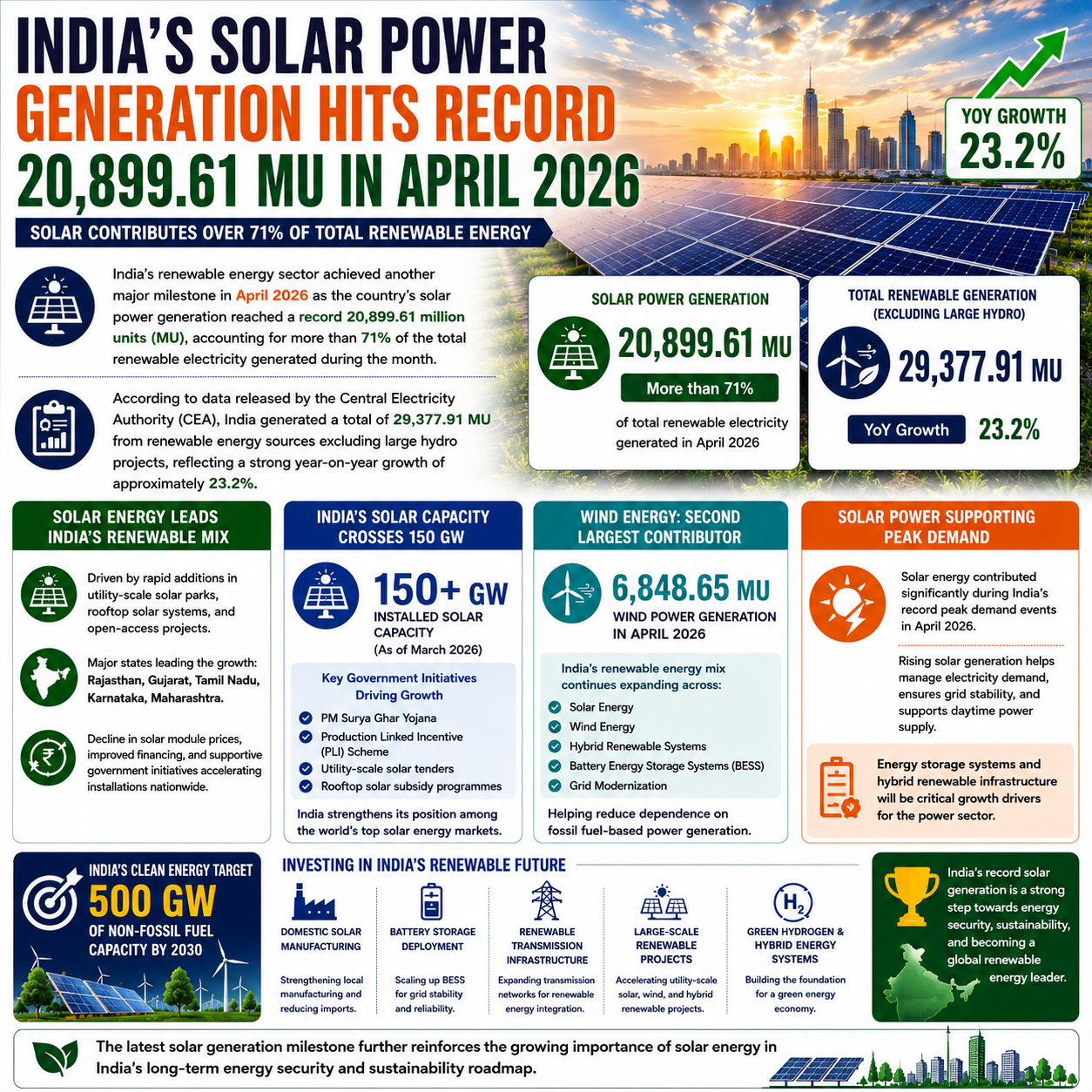


India’s renewable energy sector achieved another major milestone in April 2026 as the country’s solar power generation reached a record 20,899.61 million units (MU), contributing more than 71% of the total renewable electricity generated during the month.
According to data released by the Central Electricity Authority (CEA), India generated approximately 29,377.91 MU from renewable energy sources excluding large hydro projects, reflecting strong year-on-year growth of nearly 23.2%.
Solar Energy Dominates India’s Renewable Mix
Solar energy remained the largest contributor to India’s renewable electricity generation during April 2026.
The rapid growth was supported by:
- Utility-scale solar parks
- Rooftop solar installations
- Open-access solar projects
- Improved financing support
- Declining solar module prices
Major renewable energy states including Rajasthan, Gujarat, Tamil Nadu, Karnataka, and Maharashtra continued leading solar capacity additions across the country.
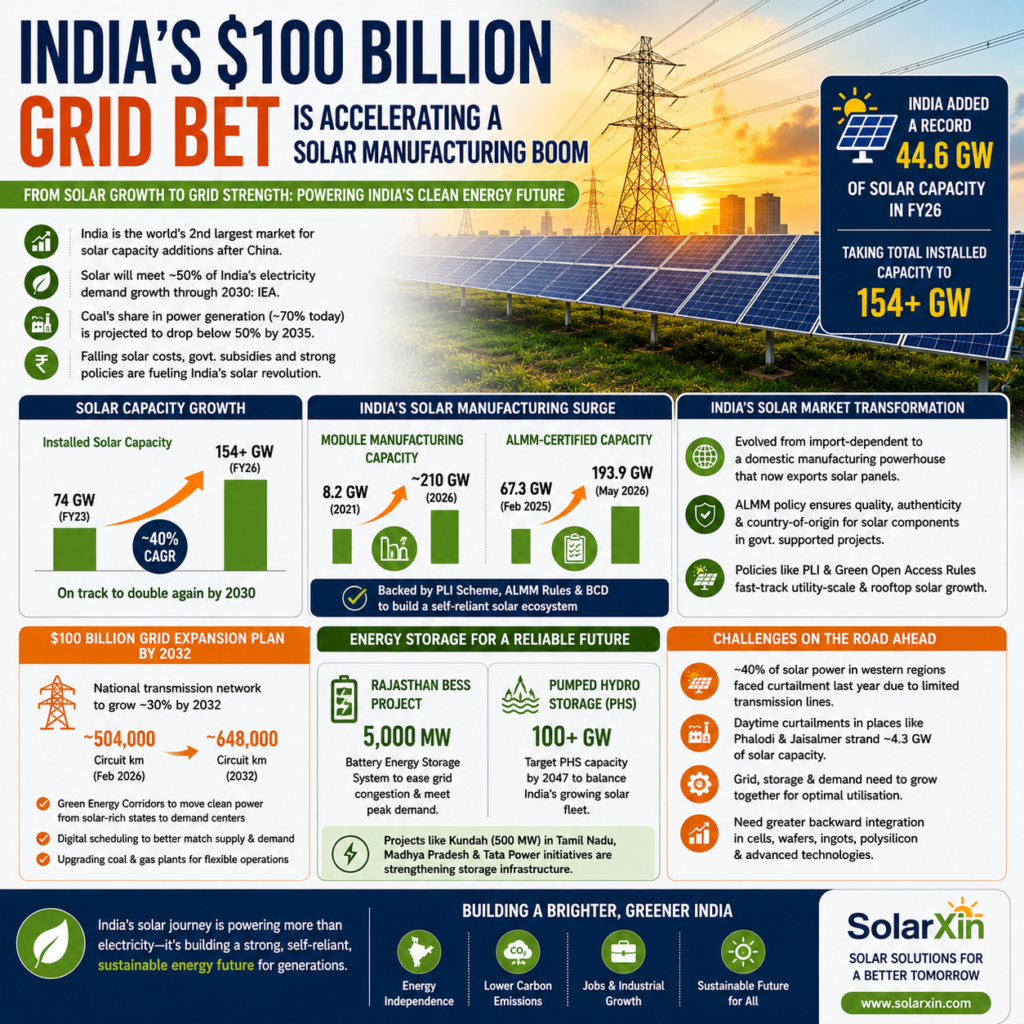
India’s Installed Solar Capacity Crosses 150 GW
India’s installed solar energy capacity has now crossed 150 GW as of March 2026, strengthening the country’s position among the world’s leading solar energy markets.
Government initiatives such as:
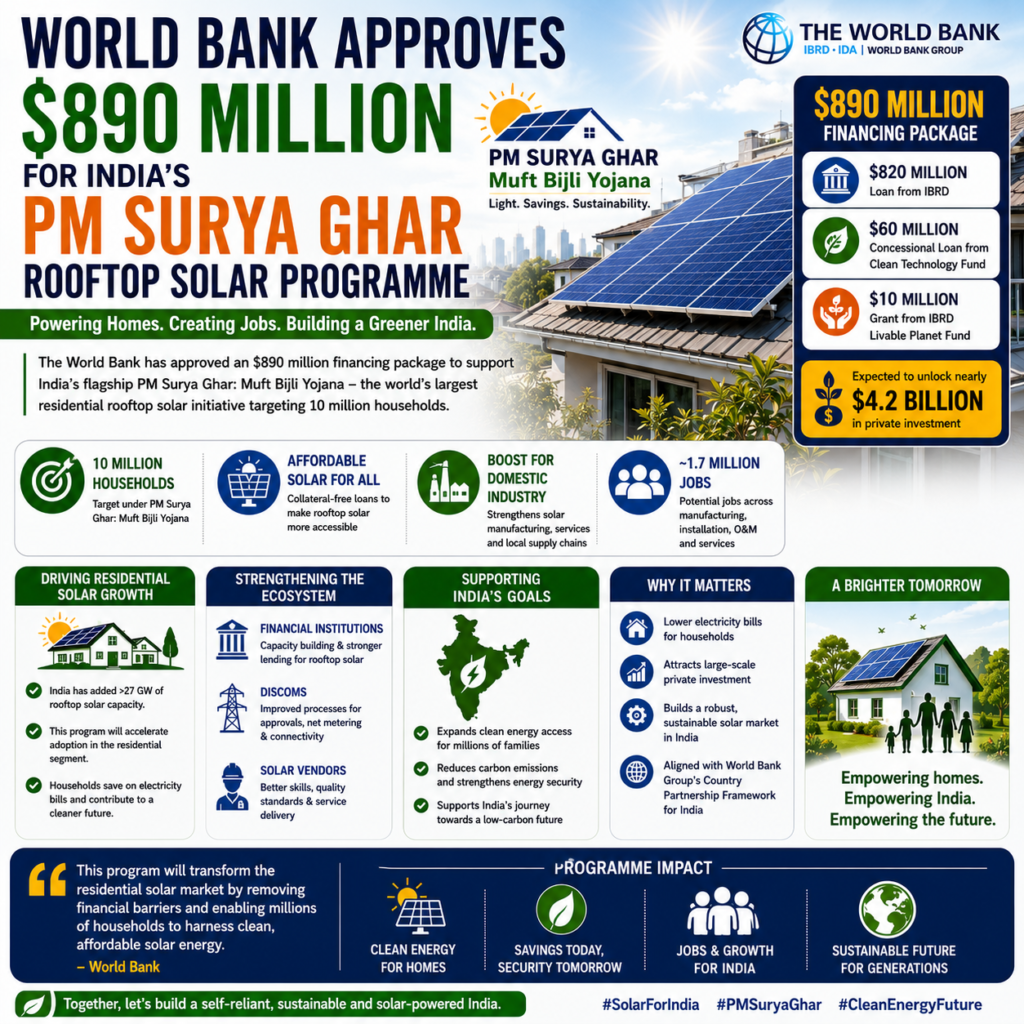
- PM Surya Ghar Yojana
- Production Linked Incentive (PLI) Scheme
- Utility-scale solar tenders
- Rooftop solar subsidy programmes
have significantly accelerated solar deployment nationwide.
Industry experts believe India’s renewable energy sector is entering a phase of faster expansion supported by strong policy backing and increasing private investment.
Wind Energy Remains the Second Largest Contributor
Wind energy remained the second-largest renewable power source during April 2026, generating approximately 6,848.65 MU.
India’s renewable energy ecosystem continues expanding across:
- Solar energy
- Wind energy
- Hybrid renewable systems
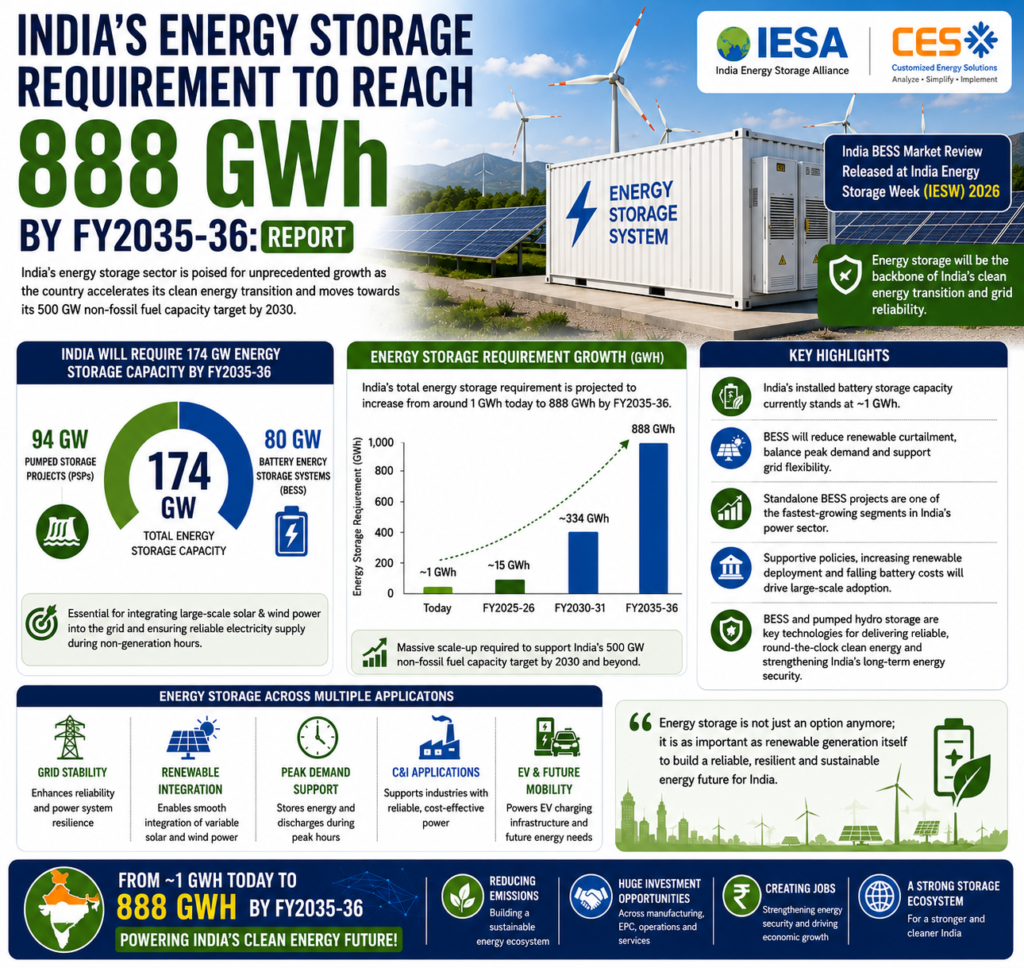
- Battery Energy Storage Systems (BESS)
- Grid modernization projects
The growing renewable energy mix is helping reduce dependence on fossil fuel-based electricity generation.
Renewable Energy Supporting Peak Electricity Demand
Experts stated that rising solar power generation is also helping India manage increasing summer electricity demand.
During several record peak demand events in April 2026, solar energy contributed significantly to grid stability and daytime power supply management.
As renewable energy penetration increases, energy storage systems and hybrid renewable infrastructure are expected to become critical growth drivers for the power sector.
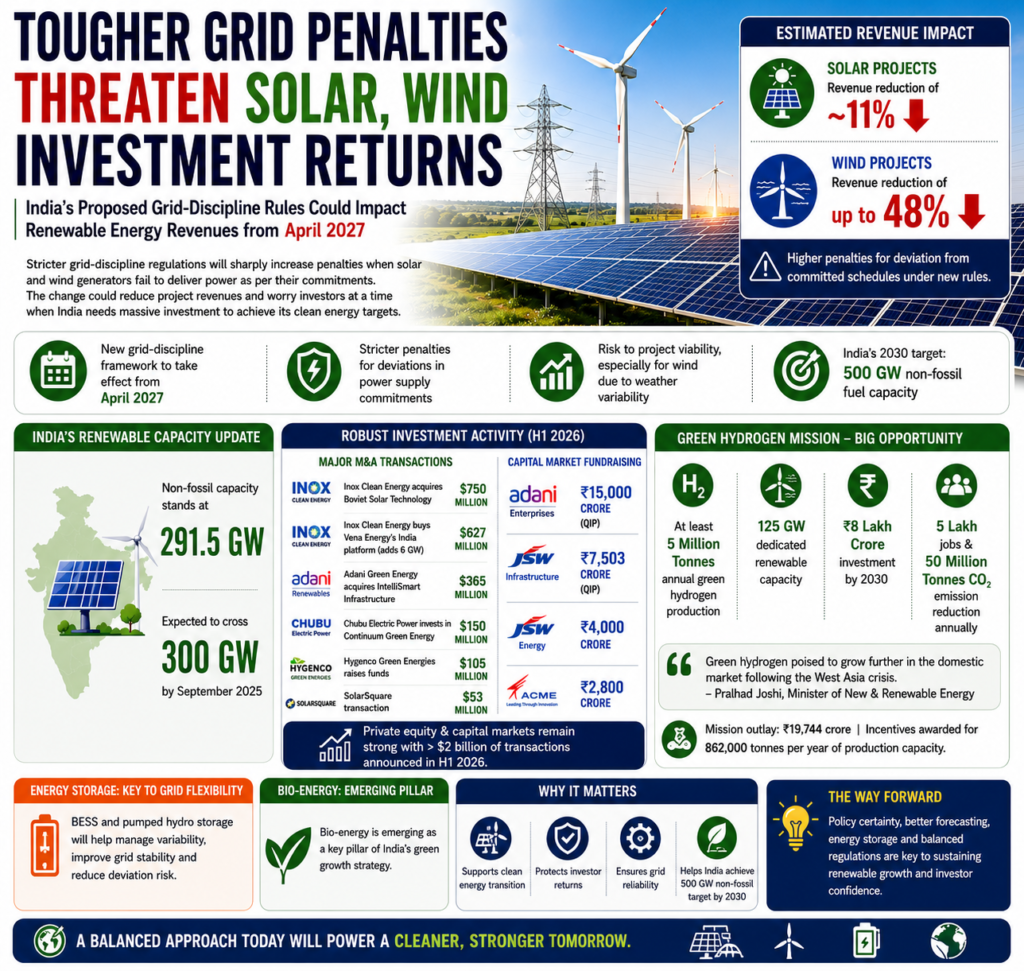
🇮🇳 India Targets 500 GW Non-Fossil Capacity by 2030
India continues moving aggressively toward its long-term renewable energy goals, including achieving 500 GW of non-fossil fuel capacity by 2030.
The country is currently investing heavily in:
- Domestic solar manufacturing
- Battery storage deployment
- Renewable transmission infrastructure
- Utility-scale clean energy projects
- Green hydrogen and hybrid energy systems
Industry analysts believe India is rapidly emerging as one of the world’s strongest renewable energy growth markets.
India’s record solar power generation of 20,899.61 MU in April 2026 marks another major achievement in the country’s clean energy transition.
With continuous investments in solar infrastructure, battery storage, and renewable energy expansion, solar power is expected to remain the backbone of India’s future energy security and sustainability strategy.