

India’s Solar Project Pipeline Exceeds 200 GW, Bringing 2030 Target Within Reach


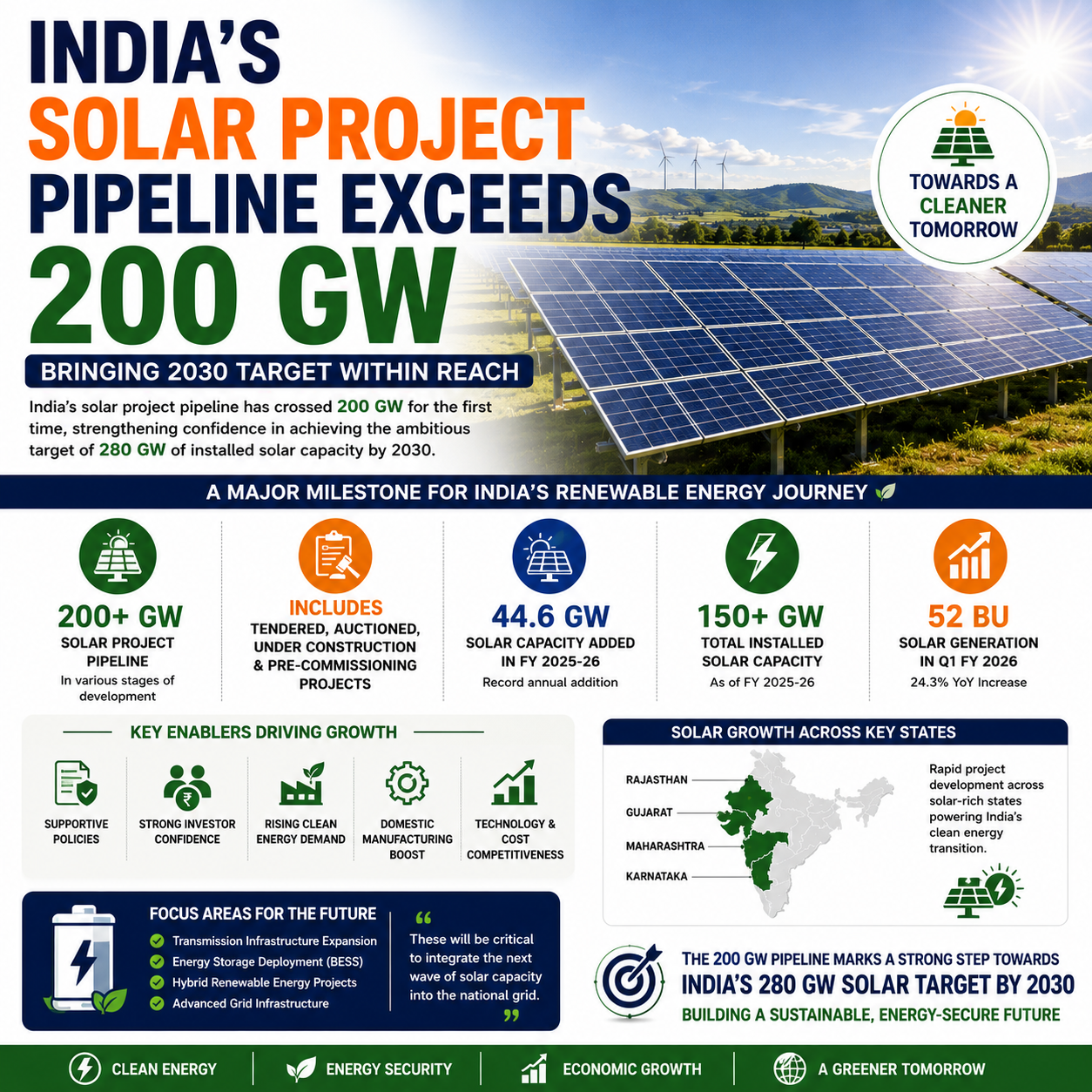
India’s renewable energy sector has achieved another major milestone as the country’s solar project pipeline has crossed the 200 GW mark for the first time. According to industry data, the growing pipeline reflects the unprecedented scale of solar development underway across the country and strengthens confidence in India’s ability to achieve its ambitious renewable energy goals by 2030.
The milestone comes at a time when solar energy continues to dominate new renewable energy additions, supported by favorable government policies, strong investor interest, and increasing demand for clean electricity from utility-scale, commercial, and industrial consumers.

India Solar Project Pipeline Crosses 200 GW
The India Solar Project Pipeline now includes projects at various stages of development, including:
- Tendered Solar Projects
- Auctioned Capacity
- Projects Under Construction
- Pre-Commissioning Solar Projects
- Upcoming Utility-Scale Installations
Crossing the 200 GW mark highlights the strength of India’s renewable energy ecosystem and the growing confidence of investors in the country’s clean energy future.
Solar Energy Driving Renewable Growth
Solar power continues to remain the largest contributor to India’s renewable energy expansion.
Over the past few years, several factors have accelerated solar deployment:
- Declining Solar Technology Costs
- Increased Private Sector Participation
- Government Renewable Energy Policies
- Corporate Clean Energy Commitments
- Expansion of Open-Access Solar Projects
Industry experts believe solar energy will remain the primary driver of India’s renewable capacity additions throughout the decade.
Record Capacity Additions Strengthen Momentum
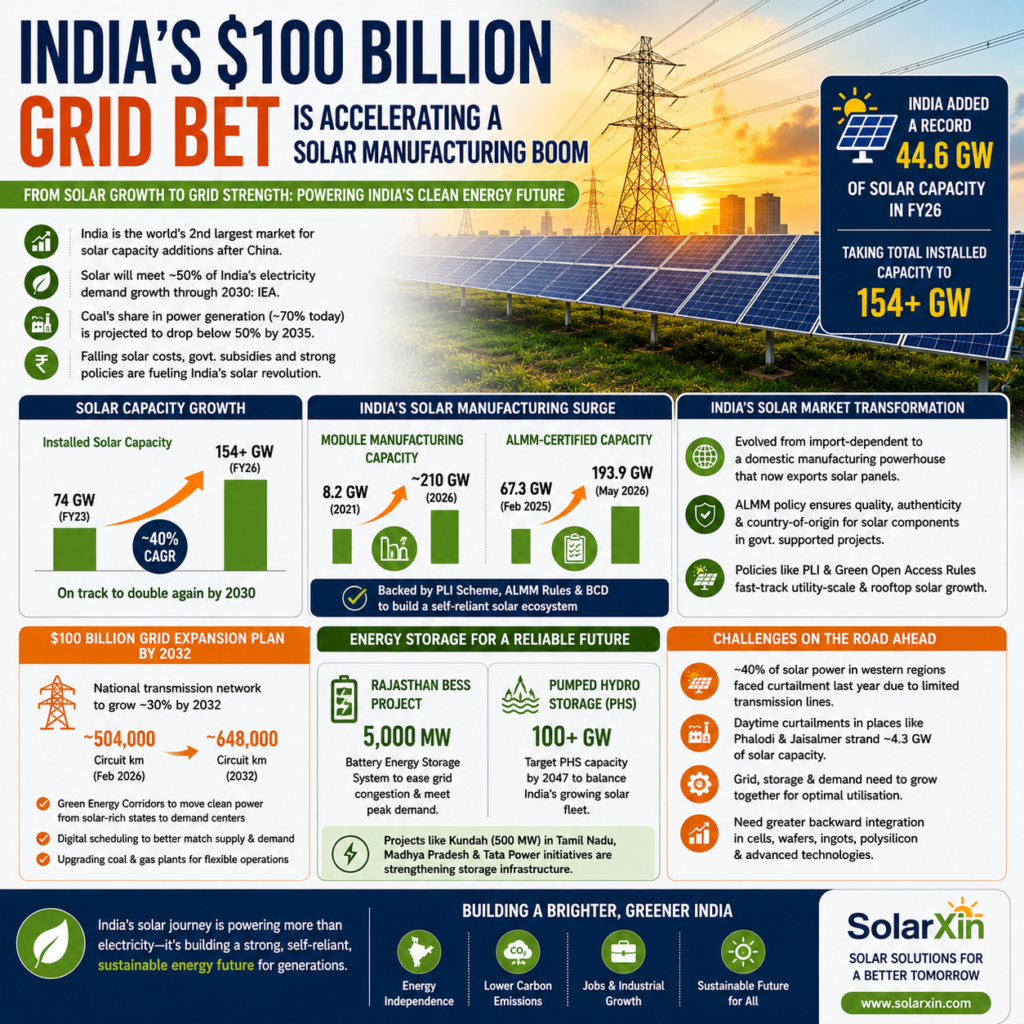
India added a record 44.6 GW of solar capacity during FY 2025-26, making it one of the strongest years for renewable energy deployment.
The growth pushed India’s total installed solar capacity beyond 150 GW and further strengthened the country’s position among the world’s leading solar energy markets.
Recent data also showed solar electricity generation reaching approximately 52 billion units (BU) during the first quarter of 2026, reflecting strong year-on-year growth.
Key States Leading Solar Development
Several states continue to drive India’s solar expansion through large-scale project development.
Major contributors include:
- Rajasthan
- Gujarat
- Maharashtra
- Karnataka
These states have emerged as important renewable energy hubs due to favorable solar resources, supportive policies, and strong infrastructure development.
Infrastructure Challenges and Future Opportunities
While the expanding project pipeline demonstrates strong momentum, industry stakeholders are increasingly focusing on critical infrastructure requirements needed to support future growth.
Key focus areas include:
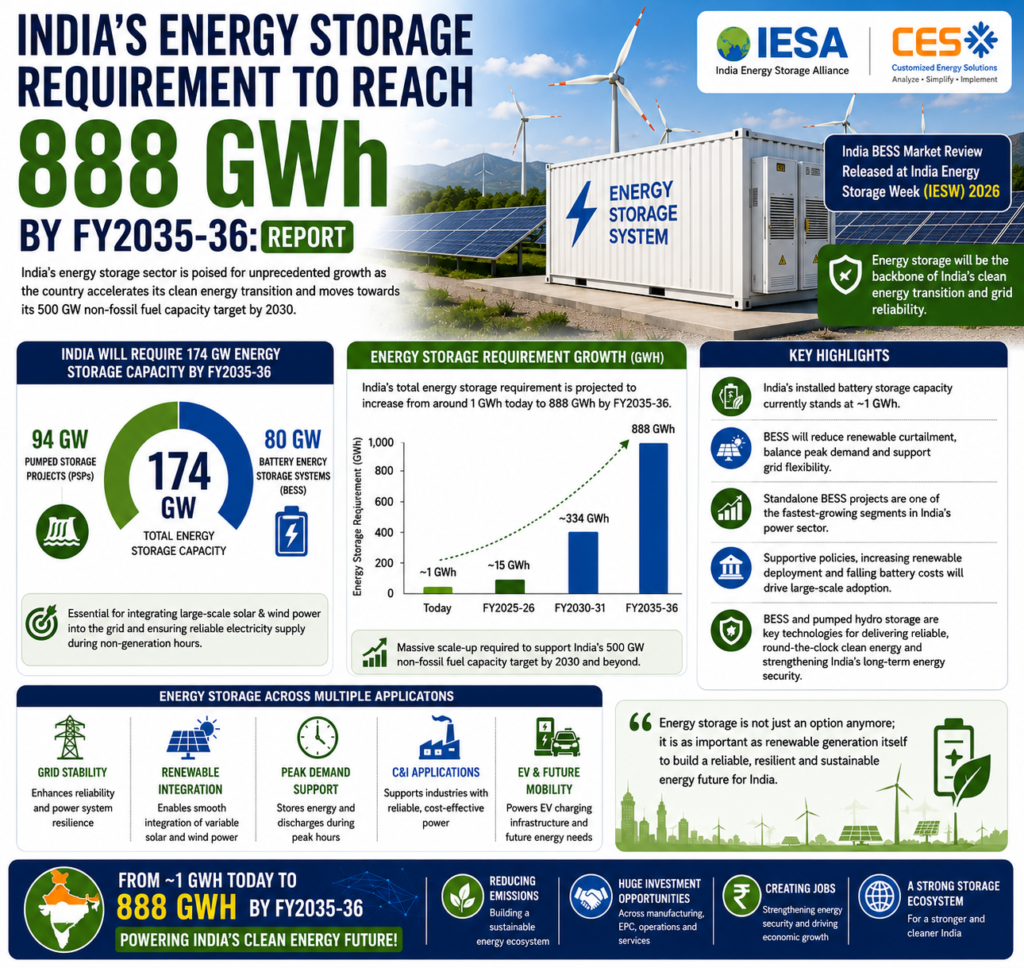
Battery Energy Storage Systems (BESS)
Energy storage will help manage solar intermittency and improve grid stability.
Transmission Infrastructure
New transmission networks are required to evacuate renewable energy from solar-rich regions.
Hybrid Renewable Projects
Combining solar, wind, and storage solutions can provide more reliable power generation.
Domestic Manufacturing
Expanding solar module, cell, and component manufacturing remains essential for long-term sector growth.
Supporting India’s 2030 Renewable Energy Targets
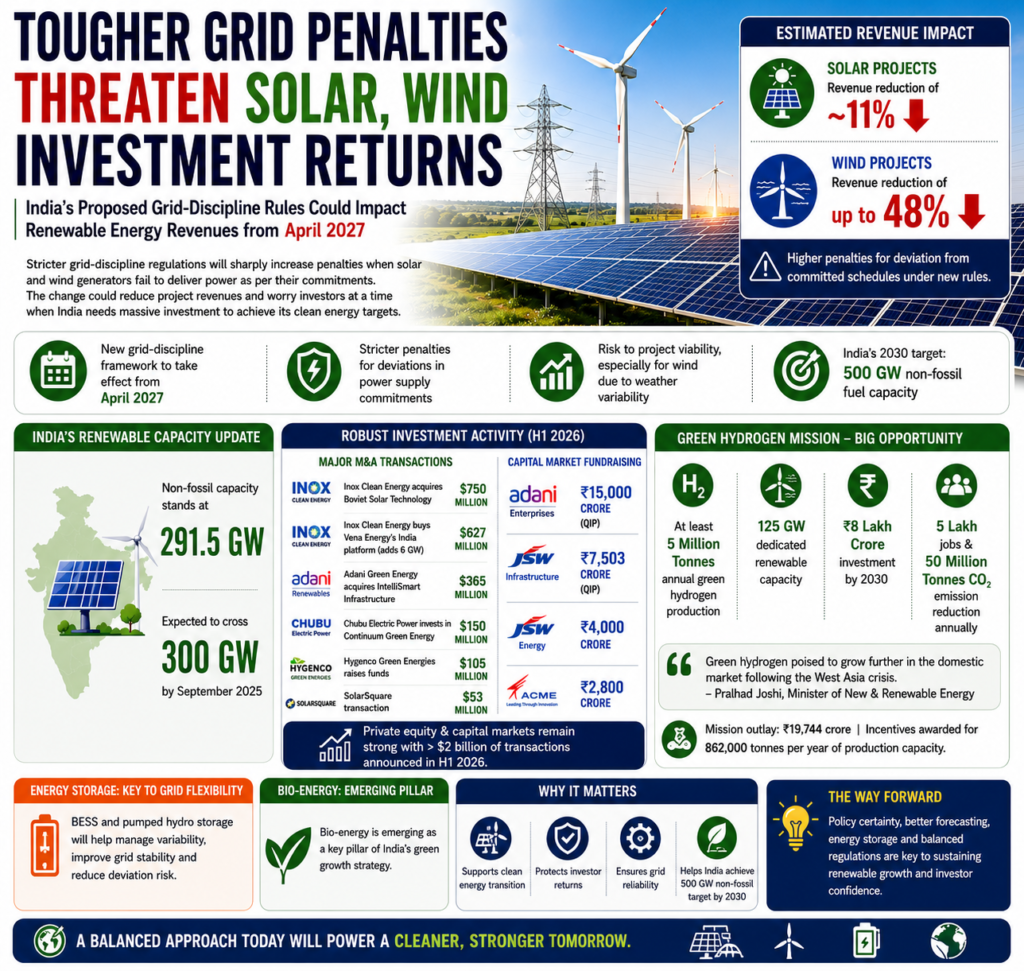
India has set ambitious clean energy goals, including achieving 280 GW of installed solar capacity by 2030 as part of its broader target of 500 GW non-fossil fuel energy capacity.
The rapidly growing project pipeline indicates that the country remains on track to achieve these objectives while strengthening energy security and reducing carbon emissions.
Industry experts believe continued policy support, infrastructure investments, and private sector participation will be crucial to maintaining this growth trajectory.
The India Solar Project Pipeline surpassing 200 GW represents a landmark achievement for the country’s renewable energy sector.
With record solar additions, strong investor confidence, and large-scale projects advancing across multiple states, India is steadily moving closer to its 2030 clean energy goals. The growing pipeline not only reflects the strength of the solar industry but also reinforces India’s position as one of the world’s fastest-growing renewable energy markets.