

Power Tariff Revision in Tamil Nadu May Increase Electricity Costs Till 2031


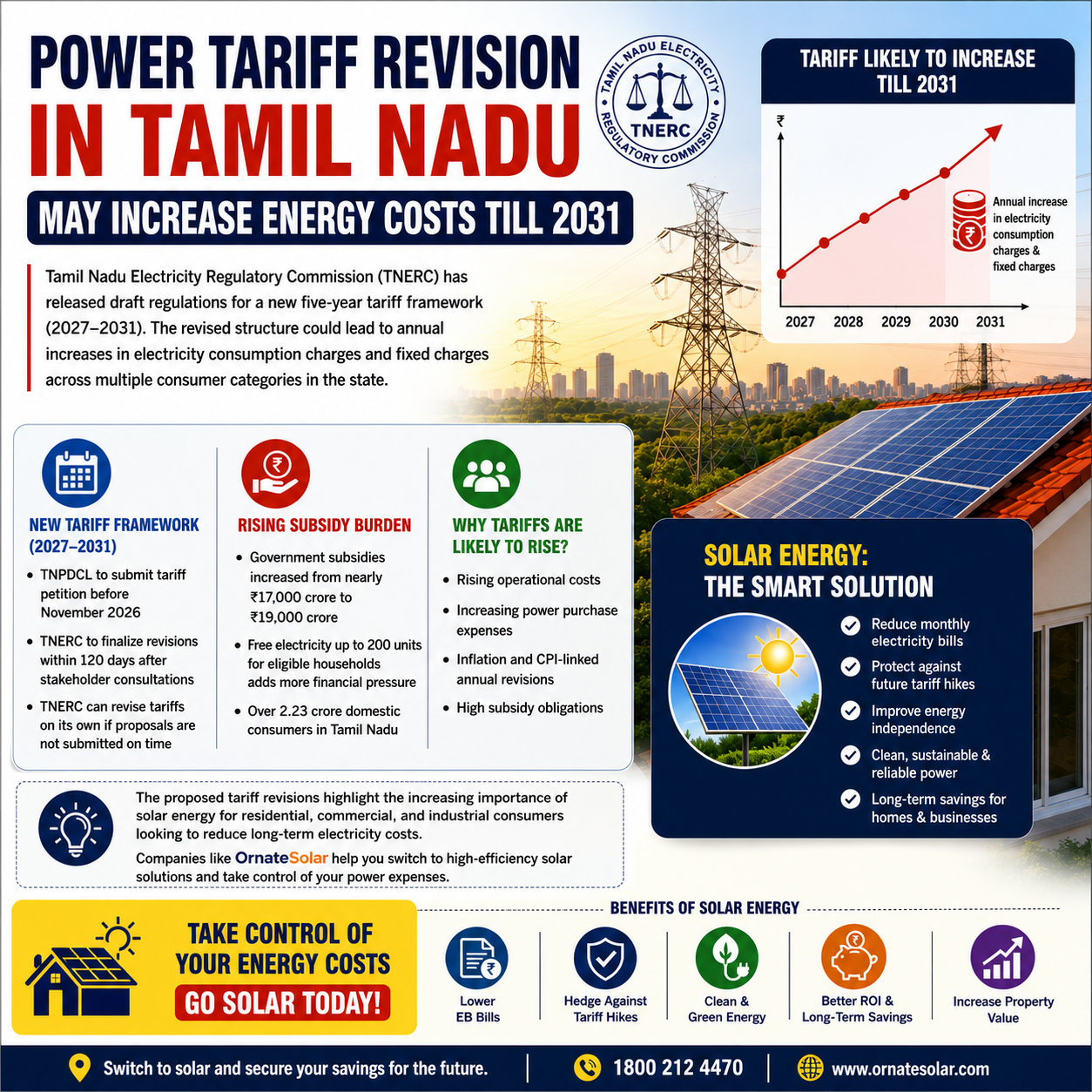
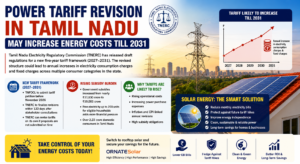
Tamil Nadu is preparing for another phase of electricity tariff revisions as the Tamil Nadu Electricity Regulatory Commission (TNERC) released draft regulations for a new multi-year tariff framework covering the period from 2027 to 2031.
According to recent reports, the proposed structure could lead to yearly increases in electricity consumption charges and fixed charges for multiple consumer categories across the state.
New Multi-Year Tariff Framework
Tamil Nadu introduced its current multi-year tariff system in 2022. Under this model, electricity tariffs are revised annually based on inflation and the Consumer Price Index (CPI).
As part of the new framework:
- Tamil Nadu Power Distribution Corporation Limited (TNPDCL) must submit a tariff petition before November 2026
- TNERC is expected to finalize tariff revisions within 120 days after stakeholder consultations
- The commission will also have authority to independently revise tariffs if proposals are not submitted on time
The proposed framework aims to create a structured long-term tariff mechanism for the state’s power sector.
Rising Subsidy Burden on Tamil Nadu Power Sector
One of the biggest concerns highlighted in the draft framework is the growing electricity subsidy burden in Tamil Nadu.
Reports indicate that government subsidy expenses have increased from nearly ₹17,000 crore to around ₹19,000 crore in recent years.
Several domestic electricity support schemes and free electricity benefits for eligible households have contributed to this financial pressure.
The state government’s decision to extend free electricity support up to 200 units for qualifying consumers has further increased subsidy obligations.
Officials estimate that Tamil Nadu currently serves more than 2.23 crore domestic electricity consumers.
Why Solar Energy Is Becoming More Important
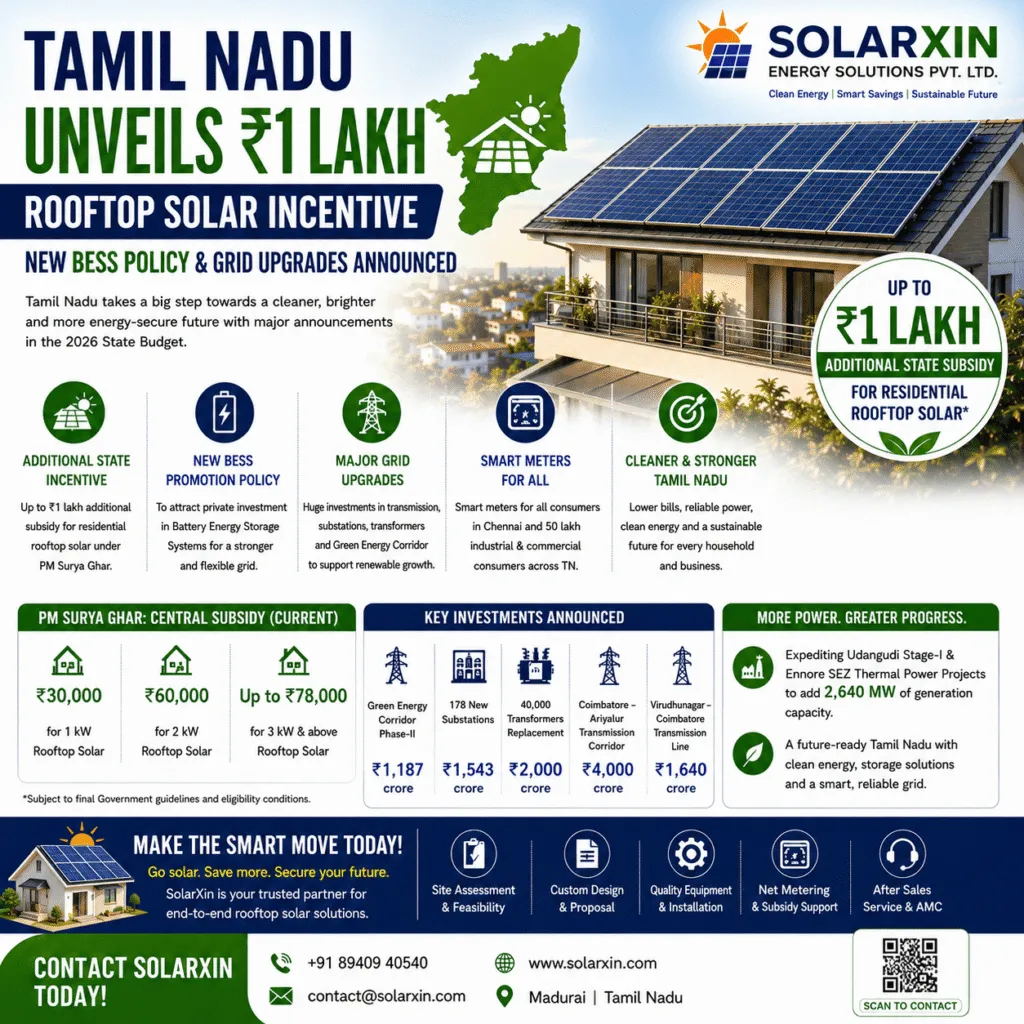
With annual electricity tariff hikes becoming increasingly likely, many residential, commercial, and industrial consumers are now exploring rooftop solar systems as a long-term solution to reduce electricity expenses.
Solar energy helps consumers:
- Reduce monthly EB bills
- Protect against future tariff hikes
- Improve energy independence
- Lower dependence on grid electricity
- Generate long-term savings
As power costs continue to rise, rooftop solar adoption is expected to grow significantly across Tamil Nadu.
Long-Term Benefits of Solar for Consumers
High-efficiency solar systems can help homeowners and businesses offset rising electricity costs over the next decade.
Benefits include:
✔ Lower monthly power bills
✔ Better return on investment
✔ Sustainable clean energy
✔ Reduced exposure to tariff increases
✔ Long-term energy security
Industry experts believe increasing tariff revisions may further accelerate rooftop solar demand in the coming years.
🇮🇳 Tamil Nadu’s Growing Renewable Energy Transition
Tamil Nadu already remains one of India’s leading renewable energy states, with strong investments in solar and wind power infrastructure.
As electricity demand increases and tariff revisions continue, renewable energy solutions are expected to play a major role in supporting affordable and sustainable power consumption.
The proposed power tariff revisions in Tamil Nadu highlight the growing financial pressure within the state’s electricity sector and the increasing likelihood of annual tariff hikes till 2031.
As a result, rooftop solar systems are becoming an increasingly attractive option for consumers looking to control long-term electricity expenses and achieve greater energy independence.
Reduce your electricity bill with solar. Click here for more updates